Purchasing a used police vehicle might initially appear to be a cost-effective choice, but these cars frequently come with significant mechanical and electrical issues due to extensive use. Factors like prolonged idling, harsh driving, frequent repairs, and degraded parts can result in defects that emerge shortly after acquisition. If these problems consistently impact the safety, value, or functionality of the vehicle, they could invoke rights under state lemon law provisions.
00:00
Why Former Police Cars Carry Higher Defect Risks
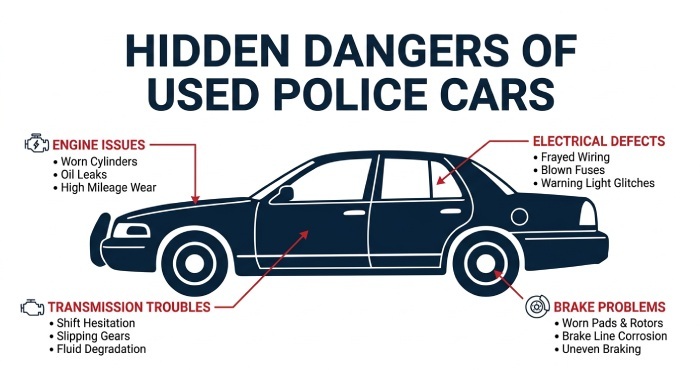
Former police cars may look affordable, but they often experience extreme wear from long idling hours, hard acceleration, aggressive braking, and constant use of electronic equipment. Even with low mileage, these vehicles may have hidden mechanical problems that affect safety, value, and reliability.
Whether a retired police vehicle qualifies under lemon law depends on state law and warranty coverage. If the car was sold with a manufacturer warranty, dealer warranty, or written warranty and develops repeated defects that cannot be repaired, buyers may still qualify for lemon law remedies such as a refund or replacement vehicle.
Common Hidden Mechanical and Electrical Problems in Retired Police Vehicles
Former police cars often develop problems that are not obvious at delivery date. A buyer may notice smooth performance at first, only to face repeated repairs weeks later. Common hidden issues include transmission slipping, cooling system failures, worn suspension components, premature brake wear, engine overheating, oil leaks, alternator failure, battery drain, and wiring faults left behind after removal of police equipment.
Electrical problems are especially common. Police vehicles may have been modified with light bars, sirens, radios, laptop mounts, spotlights, additional fuse panels, and aftermarket wiring. When these systems are removed, improper repairs can leave exposed wires, parasitic battery drains, warning lights, disabled airbags, malfunctioning sensors, or intermittent starting issues. A defect that appears minor can become a safety concern if the vehicle stalls in traffic or loses power steering.
A former police SUV may also have suffered from hard curb impacts, frame stress, damaged mounts, or excessive wear to steering and suspension systems. Even if the dealer advertises the vehicle as “well maintained,” fleet maintenance records may not reveal every repair period, repair bills, or the parts covered by prior service. Some buyers discover that prior repairs were temporary fixes rather than complete repairs.
How Prior Fleet Use, Modifications, and Repairs Can Affect Lemon Law Claims
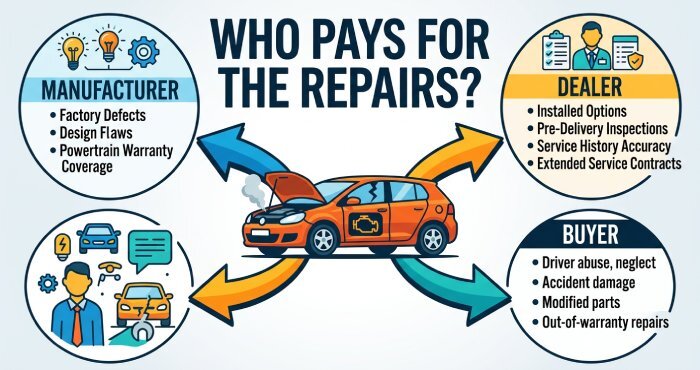
Prior fleet use can complicate a lemon law claim because the dealer, manufacturer, and buyer may disagree about what caused the defect. The manufacturer may argue that aftermarket police modifications caused the problem, while the dealer may say the issue is normal wear for a used car. The buyer, however, should focus on the written warranty, dealer warranty, manufacturer warranty, sales documents, repair order history, and whether the problem continues after repairs.
Warranty coverage and who may be responsible
A retired police car may still have a manufacturer warranty if it is relatively new and within mileage limits. In that situation, the manufacturer may be responsible for covered repairs and possibly a refund or replacement car if the lemon law requirements are met. If the vehicle was sold with a dealer warranty, the dealer may have specific obligations to repair the covered defect. A written warranty matters because many lemon laws require warranty-backed repair obligations.
If the purchase or lease involved a new car that was later discovered to have been used as a demonstrator, fleet vehicle, or prior service vehicle, additional consumer protection concerns may arise. A buyer should compare the purchase price, mileage, disclosure documents, and delivery date against what the dealer represented. Misrepresentation may support a complaint with an attorney general office, Consumer Frauds Bureau, Department of Motor Vehicles, or other consumer protection agency.
State-specific programs and case guidance
State consumer agencies and legal aid organizations provide guidance on lemon laws, warranty disputes, and arbitration programs such as BBB Auto Line®. If arbitration does not resolve the issue, buyers may pursue claims in civil court or Small Claims Court depending on state law. Some states also require a written complaint before formal legal action.
For California consumers, speaking with experienced lemon law lawyers can help determine whether a former fleet or police vehicle qualifies. A buyer in Southern California may also consult a lemon law attorney or contact San Diego Lemon Law Attorneys for case-specific guidance.
Steps to Take If a Former Police Car May Qualify for Lemon Law Protection
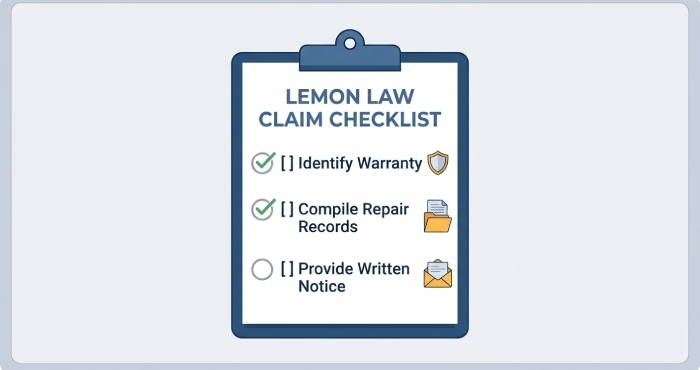
The first step is to identify the warranty source. Determine whether the used car came with a written warranty, dealer warranty, remaining manufacturer warranty, certified pre-owned coverage, or service contract. Review the parts covered, exclusions, mileage limits, and deadlines. A new car lemon law may differ from a used car lemon law, and some statutes also address a motor home differently from a regular motor vehicle.
Next, provide written notice to the dealer and manufacturer if required. A written complaint should identify the defect, list all repair attempts, attach repair order copies, and request appropriate relief. Depending on the facts, relief may include repairs, a refund, full refund, replacement car, or comparable replacement. If the dealer refuses to help, contact the manufacturer and ask for the claim number, contact information, and next steps for warranty review.
Escalation options if repairs fail
If the vehicle has been subject to a reasonable number of attempts or has been out of service for too long, consider filing through the applicable lemon law program. This may involve arbitration, lemon law arbitration, BBB Auto Line®, or an agency process through an Attorney General’s Office. In New York State, buyers can review materials from the Office of the New York State Attorney General. In Virginia, consumers in the Richmond area and elsewhere may contact the Office of the Attorney General of Virginia or the Consumer Protection Hotline; public officials such as Jay Jones have also been associated with consumer enforcement discussions in the Commonwealth of Virginia.
If informal resolution fails, the next step may be civil court, a civil lawsuit, or Small Claims Court, depending on the amount in dispute and the jurisdiction. A lawyer referral service, legal aid group, or state consumer protection office can help identify options. Buyers should act quickly because lemon laws often impose deadlines tied to the delivery date, repair period, mileage, or warranty expiration.
If an electric vehicle experiences ongoing battery issues, charging system failures, or constant software errors, it can become more of a hassle than a worthwhile purchase. Luckily, state lemon laws and the federal Magnuson-Moss Warranty Act offer essential safeguards for EV owners whose vehicles remain unrepaired after a fair number of tries.
This guide outlines the applicability of lemon laws to electric vehicles, what constitutes a significant defect, and the procedures owners can follow to seek a refund or a replacement.
What Makes an EV a Lemon: Eligibility rules, warranty basics, and how state laws and the Magnuson-Moss Warranty Act apply
A vehicle may be classified as a lemon if it has ongoing defects covered by warranty that significantly affect its functionality, worth, or safety, and the manufacturer fails to fix the problem after making a reasonable number of attempts. According to California’s Song-Beverly Consumer Warranty Act, along with similar laws in states such as New York, Texas, Pennsylvania, and Ohio, consumers need to demonstrate multiple repair attempts, prolonged periods out of service, and prompt notification to the manufacturer.
If the conditions are met, lemon law claims for electric vehicles generally allow for either a refund or a replacement car, which may also cover related expenses like towing or rental fees. Regardless of whether the vehicle is a Tesla, Chevrolet Bolt EV, Hyundai, Ford, Subaru Crosstrek Hybrid, or Volvo XC90 Recharge, the critical factor is establishing a connection between the defect and the warranty, as well as demonstrating that the manufacturer had enough chances to resolve the issue.
EV-Specific Defects and Coverage Boundaries: Batteries and range loss, charging hardware and software, thermal management, OTA updates, and common exclusions
Battery Performance, Range, and Thermal Management:
Significant battery deterioration or failures in thermal management that compromise range or safety could be covered under warranty if they do not meet the promised standards. Infrequent instances of battery fires, such as the recalls associated with the General Motors Chevrolet Bolt EV, can support lemon law cases when attempts to repair the issue fall short or when no long-term solutions are provided.
Charging Mechanisms, Software, and Connectivity Issues:
Ongoing charging problems, failures with over-the-air updates, or critical software issues — including those observed in Tesla vehicles — may be eligible for warranty claims if they significantly impair the vehicle’s functionality, value, or safety. In such cases, consulting a lemon law lawyer can help determine whether the defect meets your state’s legal standards for relief. However, normal battery degradation, temporary range reductions caused by temperature changes, post-purchase modifications, or charging infrastructure limitations typically do not qualify, provided warranty terms are being honored and documented repair attempts have been made.
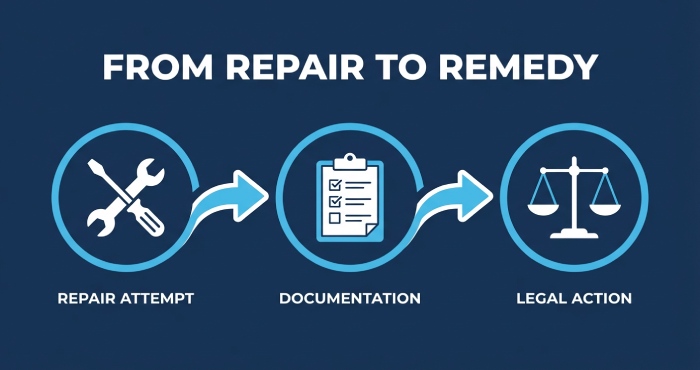
From Complaint to Remedy: Arbitration options, buyback vs replacement vs cash settlement, mileage offsets, loan/lease payoff, charging equipment, and tax credit implications
Once you’ve recorded ongoing defects and attempts at repair, you can pursue legal action, typically beginning with arbitration mandated by the manufacturer. To do this effectively, gather essential evidence such as service logs, diagnostic reports, photographs, and written notifications.
Outcomes, dollars, and details
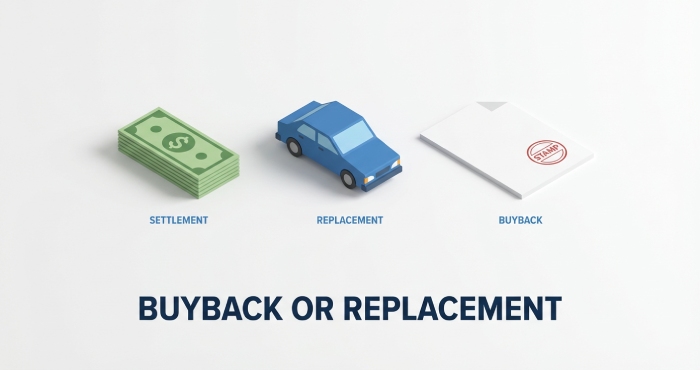
Replacement or refund: Most statutes authorize replacement or refund when an electric vehicle qualifies. Some label this as refund or vehicle replacement and allow the owner to choose.
Cash-and-keep: If repairs mostly work but value is diminished, a manufacturer settlement may provide a cash payment instead of buyback.
Mileage offset: Lemon law buybacks usually deduct a usage fee based on the odometer at first repair.
Loan/lease payoff: Buybacks should address lien or lease balances and, for leased EVs, disposition fees.
Charging equipment: Clarify treatment of home EVSE, adapters, and mobile connectors; some settlements reimburse associated costs if the charging system defect caused extra expense.
Tax credits and state incentives: A buyback can complicate federal tax credits or state incentives. Ask how a remedy impacts prior claims or future eligibility.
Special Situations and Smart Moves: Used and leased EVs, out-of-state purchases or relocation, commercial/rideshare use, safety recalls, choosing a lemon law attorney, and avoiding pitfalls
Purchasers of used and leased electric vehicles need to thoroughly examine their warranty entitlements since state lemon laws and the Magnuson-Moss Warranty Act may be relevant. Lessees should engage their lessor to ensure that any reimbursement or replacement includes lease-end charges and adheres to state regulations.
Eligibility might be restricted for commercial or rideshare applications; however, recalled vehicles like the Chevrolet Bolt EV, Hyundai Kona Electric, or Ford Mustang Mach-E could still be eligible for claims, particularly concerning outstanding battery or software issues, highlighting the importance of maintaining comprehensive documentation.
Choosing counsel, firms, and next steps
Attorney consultation: Early advice helps frame notice letters, preserve claims, and select forums (arbitration vs. litigation).
Local experience: California claims under the Song-Beverly Consumer Warranty Act are common; firms like Neale & Fhima and Jeffries Law frequently publicize results and guidance. In San Diego, many consumers start by contacting a lemon law attorney in San Diego for EV lemon law guidance.
Compare options: Some lawyers focus on Tesla, while others handle hybrid vehicle defects such as Subaru Crosstrek EV or Volvo XC90 PHEV issues.
Fees and recovery: Many statutes shift fees to the manufacturer if you prevail, easing the cost of legal remedy.
Contact a specialist: If you need a direct referral, a qualified lemon law attorney can assess manufacturer defects, outline a strategy, and coordinate expert diagnostics.
Don’t rely on verbal assurances; put notice and deadlines in writing.
Keep software updated but note any regressions after OTA patches.
Confirm whether out-of-state purchases trigger different timelines or a separate repair threshold.
Preserve charging data to distinguish infrastructure gaps from a defective electric vehicle.
Handled correctly, EV lemon law provides robust consumer protection when a modern electric vehicle suffers manufacturer defects, whether that means a replacement or refund, cash settlement, or another tailored legal remedy.
California’s enthusiasm for electric cars, especially Teslas, has reshaped its roads and communities. Yet, ongoing problems with these high-tech vehicles can make enforcing Lemon Law rights more complex than with traditional gas cars. This guide outlines how the Song-Beverly Consumer Warranty Act applies to EVs, the common challenges Tesla owners face, and steps to secure fair resolutions.
00:00
What Counts as a “Lemon” for a Tesla?
California’s Lemon Law provides safeguards for purchasers and lessees of new and certain used vehicles that are backed by a manufacturer’s warranty. A vehicle is typically classified as a lemon if it exhibits a significant defect within the initial 18 months or 18,000 miles, necessitating at least two attempts for repairs, or if it has a non-safety-related issue that requires four repair attempts, or if it has been in the repair shop for a total of 30 days or more.
While this presumption simplifies the claims process, it is not the sole option available. Even after the 18-month or 18,000-mile period, a car may still be deemed a lemon if it continues to require repeated repairs under warranty that fail to resolve issues affecting its usability, safety, or overall value.
Why EVs—and Teslas—Create Unique Lemon Law Challenges
Battery and Range Issues
The battery is key to an EV’s performance, but problems like rapid capacity loss, reduced range, or charging issues may occur. Since Tesla’s warranty covers capacity retention, carefully tracking usage data and keeping records can help distinguish defects from normal wear and strengthen your case if concerns are dismissed.
Software Glitches and OTA Updates
Tesla’s over-the-air updates can fix issues remotely but may also cause new problems like braking glitches, autopilot failures, or screen reboots. Since each update counts as a repair attempt under Lemon Law—and downtime while waiting for an update can add to the 30-day threshold—it’s important to document update versions and dates carefully.
Charging Equipment and Infrastructure Challenges
Issues like charger malfunctions, supercharging failures, or faulty charge ports can leave drivers stranded. Careful documentation is key—if charging problems persist across different stations, outlets, or connectors, it shows the defect is with the vehicle itself rather than the charging setup.
Calibration of ADAS and Sensors
Advanced driver-assistance systems depend on correctly calibrated cameras, radar, and sensors. After a windshield replacement or collision repair, misalignment can trigger constant alerts or erratic behavior, and repeated failed recalibrations may count as a “reasonable number of repair attempts” under Lemon Law standards.
Availability of Parts and Delays in Service
When a vehicle is at a repair shop waiting for a specific part or advanced diagnostic services, the days it remains out of service accumulate quickly. If the delay is due to the manufacturer, these days typically contribute to the 30-day limit, even if no one is actively working on the vehicle.
EVs—and Teslas in particular—create unique Lemon Law challenges in Tecate, California, due to complex battery issues, software glitches, and specialized repair requirements.
What Remedies Does the California Lemon Law Provide?
If your Tesla is deemed a lemon, you typically have two main options for resolution:
Buyback: The manufacturer will repurchase your vehicle and refund your payments, fees, and certain costs like towing or rentals. The refund is reduced by a mileage offset for the miles driven before the first major defect. In California, this mileage offset is calculated as follows: offset = (miles driven until the first repair attempt ÷ 120,000) × purchase price.
Replacement: You may receive a new vehicle with similar specifications, adjusted for taxes and fees. Many prefer a buyback, but replacement is a good choice if you want to stay with the same brand and model.
If a manufacturer knowingly violates the law, courts can impose civil penalties of up to twice the actual damages, plus attorney’s fees and costs. This fee-shifting rule often allows you to work with a Lemon law attorney in San Diego without any upfront payment.
How to Build a Strong Tesla Lemon Claim
Maintain Detailed Records:
Keep a detailed log noting dates, mileage, symptoms, error messages, photos or videos, and how the issue affects usability, value, or safety (e.g., “requires extra charging stop on regular route”). For software issues, also record firmware versions and update timestamps.
Importance of Service Documentation:
Ensure that all repairs are conducted through official channels and retain every work order and invoice — even those indicating “no trouble found.” If a mobile service technician visits, ask for a detailed report of diagnostics and any parts used.
Distinguishing Repairs from Temporary Fixes:
While a hard reboot or software update may be a legitimate fix attempt, if the same issue reoccurs, it is still categorized as another repair effort. Keep track of how long your vehicle is out of commission, whether it’s in the shop, waiting on parts, or parked at home due to a recognized problem.
Conduct Charging Tests in Various Settings:
If charging issues arise, test your vehicle at home (Level 2), at different public charging stations, and at Superchargers. Record station IDs, testing times, ambient temperatures, and results. Identifying consistent patterns across locations can reinforce the argument that the vehicle is at fault.
Gather Battery Health Data:
Utilize the vehicle’s energy display, trip meters, and any health reports provided by the manufacturer. If you notice a significant drop in range following an over-the-air update, document the metrics before and after the update along with any relevant release notes.
Tips to Avoid Future Headaches
Prior to making a purchase, it’s essential to examine the warranty on the battery, confirm the capacity assurances, and investigate any issues related to specific model years. During the initial month of ownership, gather fundamental information regarding the vehicle’s range, charging speed, and software version for future reference. Consistently monitor over-the-air (OTA) updates by keeping a record of versions and changes, and promptly document any new issues that arise while seeking service when necessary.
Tesla’s advanced technology presents unique challenges, including battery and charging issues, as well as software and safety defects. With the help of a California Lemon Law lawyer, you can better protect your rights. By keeping detailed records and using authorized repair services, you strengthen your claim for a refund or replacement if these problems continue under California’s Lemon Law.