California Lemon Law Buybacks and Core Tax Concepts
How California Lemon Law Vehicle Buybacks Work
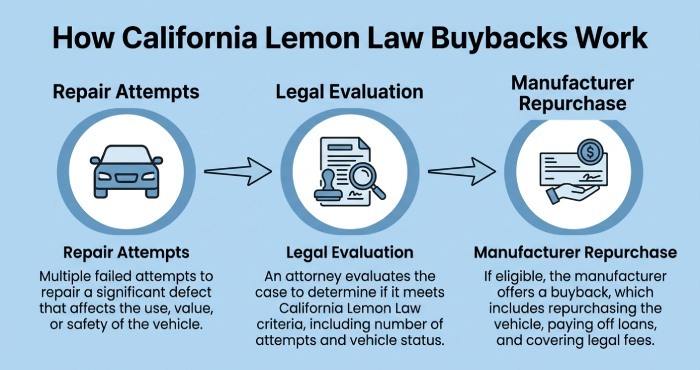
Under the California lemon law, a consumer may be entitled to a vehicle repurchase, replacement, or negotiated lemon law settlement when a manufacturer cannot repair substantial defects within a reasonable number of attempts. The lemon law legal process typically begins with documenting repair orders, warranty history, mileage, purchase or lease terms, and communication with the dealer or manufacturer. A lemon law lawyer evaluates whether the defect affects use, value, or safety and whether the manufacturer has met its legal obligations.
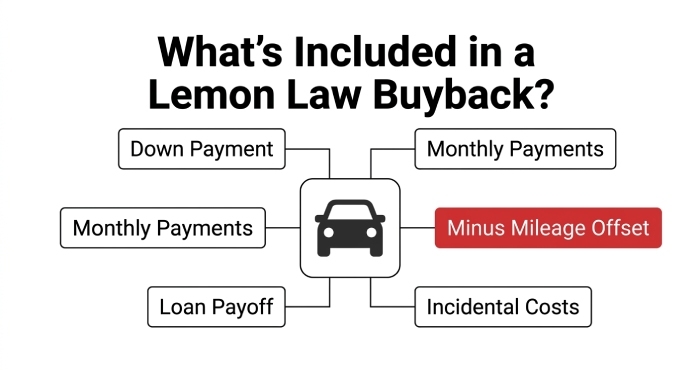
In a vehicle buyback, the manufacturer generally repurchases the defective vehicle by refunding amounts paid by the consumer, often reduced by a mileage offset for use before the first relevant repair attempt. A California lemon law buyback may include the down payment, monthly payments, payoff of the loan or lease balance, registration charges, certain fees, and qualifying incidental damages. Because each lemon law settlement is fact-specific, the tax implications can vary.
Consumers often ask whether lemon law settlement proceeds are taxable. In many vehicle buyback situations, the settlement proceeds are treated as a refund of the purchase price rather than taxable income. However, not every payment in a lemon law settlement is automatically non-taxable. The tax implications depend on what the payment represents, how the agreement is structured, and whether any portion compensates the consumer beyond reimbursement.
What a Buyback Usually Includes
A California lemon law repurchase typically covers the vehicle’s purchase or lease payments, minus the statutory mileage offset, and may also include loan payoff, trade-in credit, and qualifying expenses such as towing, rental cars, rideshare, or repair costs. Because a vehicle buyback may represent a return of amounts the consumer previously paid, some portions of the recovery may not be treated as taxable income. However, the tax treatment depends on the nature of the payment, the underlying claim, and how the settlement is structured.
Documents to Keep for Lemon Law and Tax Purposes
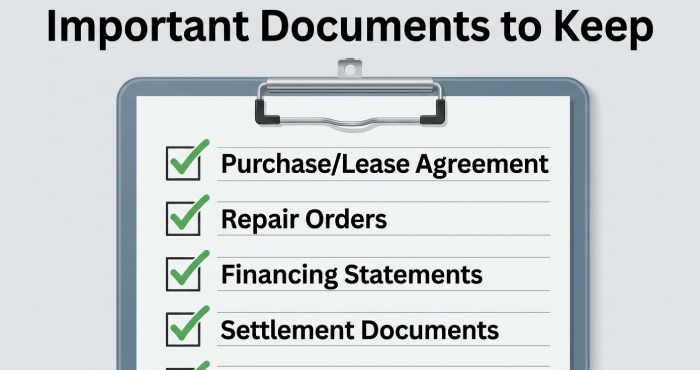
Consumers should keep copies of their vehicle purchase or lease agreement, repair orders, warranty records, financing statements, payoff information, settlement documents, receipts for reimbursed expenses, and any tax forms received in connection with the settlement. These records can help document the amounts paid, reimbursed expenses, and how the settlement was structured. A tax professional can use this information to evaluate the appropriate tax treatment and reporting requirements.
Settlement Taxability and Professional Guidance
Tax Treatment of Refunds, Settlements, and Cash-and-Keep Offers
The tax treatment of a California lemon law settlement depends on how the payment is characterized. A full buyback may generally be treated as a return of the consumer’s purchase price rather than taxable income, while cash-and-keep payments require closer review because compensation for diminished value, inconvenience, or other losses may have different tax consequences. A lemon law lawyer can help clarify settlement language and payment allocation, but a qualified tax professional should determine whether any portion is taxable and how it should be reported. Clear documentation identifying payments as refunds, reimbursements, statutory recoveries, or other compensation can help reduce future tax uncertainty.
Sales Tax, Registration Fees, and Incidental Cost Reimbursements
California lemon law buybacks may include reimbursement for sales tax, registration fees, and qualifying incidental expenses such as rental cars, towing, repairs, and travel costs. These amounts are generally intended to restore money the consumer previously paid rather than provide new income, although tax treatment can vary depending on the settlement structure and prior deductions. Consumers should keep receipts, repair invoices, registration records, loan statements, payoff letters, and manufacturer communications to document reimbursed expenses and help a tax professional determine the appropriate tax treatment.
When Lemon Law Compensation May Be Taxable Income
The tax treatment of California Lemon Law compensation may vary depending on what the payment is intended to compensate and the nature of the underlying claim. Amounts that represent a return of the vehicle’s purchase price or reimbursement of certain expenses may receive different tax treatment from amounts awarded for other purposes, such as interest, lost income, or additional compensation.
The IRS generally looks to the origin and nature of a claim when determining the federal tax treatment of settlement proceeds. If a settlement includes multiple payment categories, clear documentation and allocation may be important. Receiving a Form 1099 does not necessarily mean that the entire settlement is taxable. Consumers should consult a qualified tax professional regarding their individual reporting and documentation requirements.
Why a California Lemon Law Lawyer and Tax Professional Matter
A California lemon law lawyer helps protect the consumer’s legal rights, evaluates liability, manages litigation strategy when needed, and negotiates the structure of the lemon law settlement. For consumers comparing representation, a california lemon law lawyer can explain how buybacks, replacements, mileage offsets, and cash-and-keep resolutions typically work. Consumers with recreational vehicle claims may also benefit from speaking with an rv lemon law attorney, while local consumers may prefer a lemon law attorney san diego for regional guidance.
The tax professional is equally important because legal advice from an attorney is not the same as individualized tax advice. The California lemon law lawyer focuses on the legal process, manufacturer compliance, settlement language, and legal responsibilities. The tax professional focuses on taxable income, tax implications, tax compliance, and whether the lemon law settlement proceeds should be reported. Together, they help reduce the risk of an unfavorable tax result.
Numerous buyers acquire extended warranties with the belief that they provide thorough coverage, only to find out later that some repairs are not included when issues occur. Typical exclusions can encompass items affected by normal wear and tear, regular maintenance, pre-existing issues, and damage resulting from misuse or neglect. By being aware of these restrictions before agreeing to a warranty, consumers can prevent surprise expenses and make wiser choices regarding their coverage.
Wear-and-Tear Items and Routine Maintenance That Extended Warranties Usually Do Not Cover
An extended warranty is often marketed as purchase protection against expensive car repairs, but consumers frequently misunderstand what warranty coverage actually includes. Unlike a factory warranty or manufacturer warranty, which typically comes with a new vehicle purchase, an extended warranty is usually a service contract sold by a dealership, auto dealer, service plan company, or Private warranty provider after—or near the end of—the original warranty period.
Consumables, Maintenance, and “Normal Use” Parts
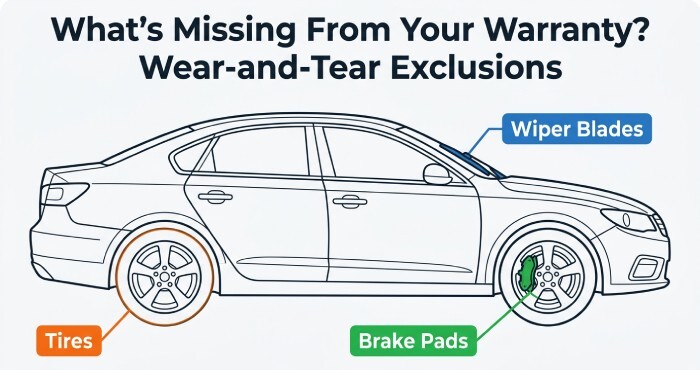
Most extended warranty plans exclude wear-and-tear items and routine maintenance. Brake pads, tires, wiper blades, belts, hoses, fluids, filters, spark plugs, alignments, and oil changes are rarely covered parts. Even when bumper-to-bumper coverage sounds broad, the warranty fine print may state that maintenance items are outside the service contract.
This is also true for many dealer warranty products, third-party warranty plans, and even some used car warranty agreements. A dealer warranty may cover specific mechanical failures, but it usually does not pay for predictable deterioration. Powertrain coverage, for example, may include engine coverage, transmission coverage, and drive axle coverage, but it will not usually cover clutch wear, fluid services, or damage caused by missed maintenance.
Why “Bumper-to-Bumper” Does Not Mean Everything
Bumper-to-bumper coverage can be misleading. A factory warranty may offer strong bumper-to-bumper coverage for a limited period, but an extended warranty version may include more warranty exclusions. The manufacturer warranty might cover defects in workmanship, while a third-party warranty may only cover listed failures of named components. Consumers should compare factory warranty terms, dealer warranty promises, and third-party warranty limits before assuming the warranty benefits are identical.
Pre-Existing Problems, Improper Repairs, and Maintenance Record Requirements
Maintenance Records and Claim Denials
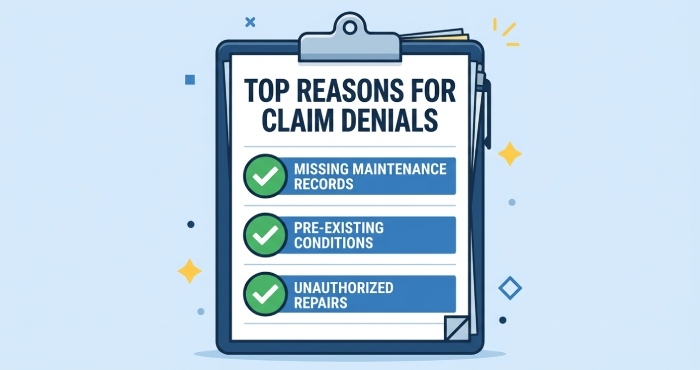
Extended warranty providers often require proof that the vehicle was maintained according to the manufacturer’s recommended service schedule. Missing records for oil changes, coolant flushes, or transmission services can lead to claim denials, particularly when engine, transmission, or drivetrain components fail.
Coverage may also be denied if prior repairs were performed improperly, non-OEM parts were used where required, or unauthorized repairs contributed to the breakdown. In addition, many warranty contracts require repairs to be completed at approved repair facilities or dealerships before reimbursement or coverage will be considered
Keep Written Proof Before and After Repairs
A written warranty, maintenance receipts, diagnostic reports, and repair invoices can be critical. A reputable provider will explain documentation requirements clearly, while a less transparent service contract provider may rely on vague language to deny repair bills. Consumers should also track repair attempts, mileage limitations, and any conversations with the warranty administrator.
Exclusions for Electronics, Software, Diagnostics, and “Non-Mechanical” Components
Modern vehicles depend heavily on software, sensors, modules, cameras, infotainment systems, hybrid systems, and advanced driver-assistance technology. Yet many extended warranty contracts still distinguish between “mechanical breakdown” and electronic, software, diagnostic, or non-mechanical failures.
Electronics and Diagnostics Are Often Limited
Factory warranties typically include coverage for electronic parts while the original warranty is in effect. However, extended warranties frequently do not cover certain items like screens, navigation systems, key fobs, wiring, software upgrades, and diagnostic services.
Additionally, battery coverage may be restricted, with distinct warranties available for various battery components. Since coverage levels can differ significantly, it is crucial for consumers to thoroughly examine the warranty details and manufacturer information to know what is included and what is excluded.
How Lemon Law Protections Differ from Extended Warranty Coverage and When Consumers Should Seek Legal Help
Lemon law protections are fundamentally different from an extended warranty. A factory warranty, manufacturer warranty, dealer warranty, third-party warranty, or service contract is simply a promise to repair or pay for certain covered components. By contrast, lemon law rights are legal remedies that may apply when substantial vehicle defects persist despite reasonable repair attempts. A California lemon law lawyer can evaluate the repair history, warranty coverage, and defect documentation to determine whether the consumer may be entitled to a refund, replacement vehicle, or other relief under California’s lemon law statutes.
Warranty Coverage vs. Statutory Rights
A lemon law claim usually focuses on defects covered during the original manufacturer warranty or factory warranty period. State lemon law rules vary, but many require repeated repair attempts, a serious safety defect, or the vehicle being out of service for a specified number of days.
In Oakland, California, consumers may also rely on federal protections under the Magnuson-Moss Warranty Act when a written warranty is breached, supporting claims involving warranty coverage disputes, repeated repair failures, and deceptive warranty practices.
An extended warranty may help pay for out-of-pocket repairs after the factory warranty expires, but it generally does not create the same refund eligibility, replacement rights, or statutory compensation available under lemon law. A third-party warranty denial may be a contract dispute, while a lemon law case may involve the car manufacturer’s failure to repair defects under the manufacturer warranty. Arbitration may be required in some programs, and some consumers may encounter an arbitration form from a car manufacturer or state agency.
A lemon law expert or Lemon Law attorney can help determine whether the consumer has a service contract dispute, a manufacturer warranty claim, or a true lemon law claim. In California, consumers may consult a San Diego lemon lawyer to evaluate their legal options and determine whether they qualify for remedies under the state’s lemon law protections.
If the issue involves repeated defects during the factory warranty, lemon law may offer stronger remedies than an extended warranty. If the dispute involves denied repair costs under a dealer warranty, third-party warranty, or customizable coverage plan, the consumer may need to challenge service claim restrictions, repair shop restrictions, or improper exclusions directly with the service contract provider.
When a leased car turns out to be a lemon car, many California drivers assume a manufacturer buyback ends every financial issue tied to the vehicle lease. In practice, lease-end charges can still appear after a California Lemon Law buyback, especially if the dealer, finance company, or manufacturer has not correctly reconciled the account.
For leased vehicles covered by a manufacturer’s warranty, the key questions are whether the leased car had a substantial defect, whether there was a reasonable number of repair attempts, and whether the consumer’s lemon law claim resulted in a refund, vehicle replacement, or other compensation.
How California Lemon Law Applies to Leased Vehicles
Leased Vehicles Are Covered Under the Song-Beverly Consumer Warranty Act
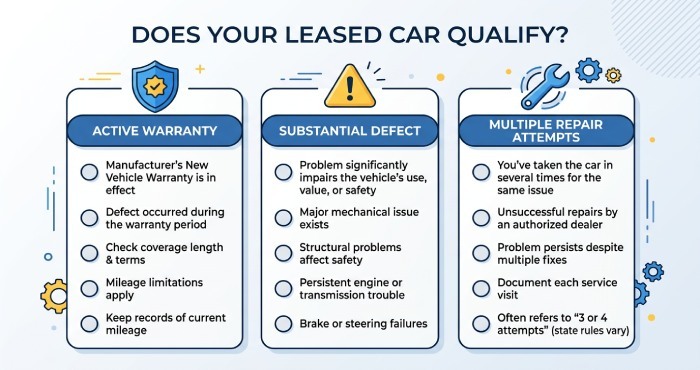
The California Lemon Law, formally tied to the Song-Beverly Consumer Warranty Act, protects many consumers who lease rather than buy. Leased vehicles can qualify when they are covered by the manufacturer’s warranty and have substantial problems that impair vehicle use, vehicle value, or vehicle safety.
A leased car may qualify if a substantial defect arises during warranty coverage and the manufacturer or authorized repair facility cannot fix it after a reasonable number of repair attempts. This is true for many brands, including Mercedes, BMW, and Mini Cooper models, as well as some used vehicles or certified pre-owned vehicles if the manufacturer’s warranty remains active.
Defect Criteria and Repair Attempts Matter
To bring a strong lemon law claim, the defect criteria must be clear. The issue should not be minor or cosmetic; it should involve a substantial defect, recurring malfunction, safety issues, or vehicle use impairment. A reasonable number of repair attempts depends on the facts, but repeated visits to a dealership, repair facility, or repair shop for the same concern can support the claim.
Special Situations: Business Vehicles and Military Members
Some business vehicles may qualify if they meet statutory limits. Members of the U.S. Armed Forces may also have important protections depending on where the vehicle was purchased, leased, registered, or used. Because leased vehicles involve both a lease agreement and warranty rights, legal counsel can help evaluate eligibility.
What Happens to Your Lease After a Manufacturer Buyback
Buyback, Replacement Vehicle, or Purchase Refund
If a California lemon law claim is successful, the manufacturer may provide a vehicle repurchase, replacement, or other compensation. For leased vehicles, remedies often include reimbursement of lease payments, recovery of the down payment, and satisfaction of the remaining lease balance, subject to any applicable mileage offset. An experienced lemon law attorney can review the warranty and repair history to determine whether the vehicle qualifies for a full remedy under California Lemon Law.
Termination of Lease and Account Reconciliation
A buyback should usually result in termination of lease obligations tied to the defective vehicle. However, early lease termination language in the lease agreement can create confusion if the finance company’s system automatically assesses charges. That does not always mean the fees are valid.
What the Manufacturer Should Address
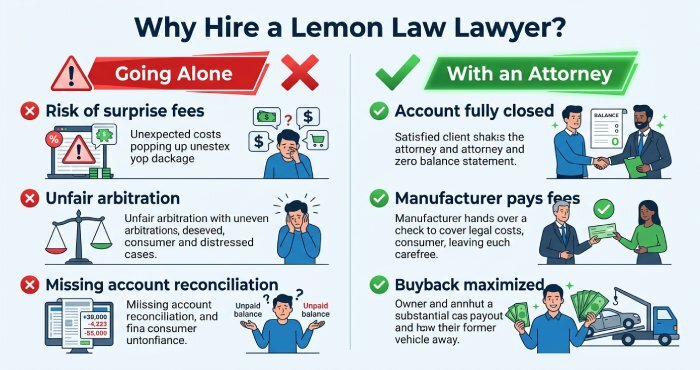
The manufacturer should coordinate with the leasing company to close the account, remove improper balances, and process the buyback correctly. A lemon law lawyer can assist with manufacturer negotiations, manufacturer notification, and the legal process so the consumer is not left disputing lease-end invoices alone.
Arbitration May Not Resolve Every Lease Charge
Some manufacturers encourage arbitration, but arbitration may not fully address all lease accounting issues. Before agreeing to arbitration or signing a release, lessees should understand how the lemon law claim affects lease-end charges, attorney fees, and any remaining balance.
Common Lease-End Charges Drivers May Still See
Mileage, Wear, and Disposition Fees
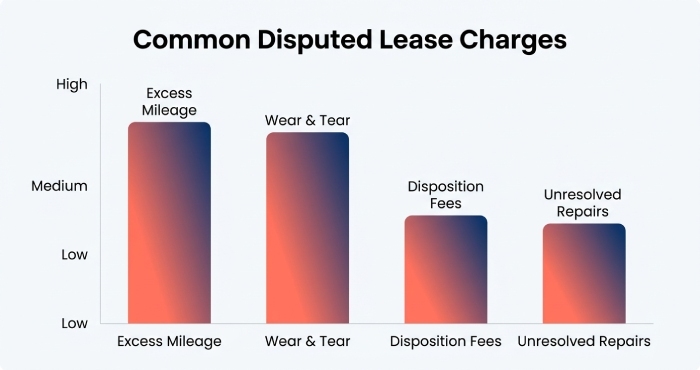
Even after a California Lemon Law buyback, lessees may see invoices for excess mileage, excess wear, disposition fees, missing equipment, or inspection charges. These charges are common in ordinary leased vehicles, but a leased car subject to a lemon law claim requires closer review.
Repair, Damage, and Inspection Charges
Drivers may also see charges for body damage, tire wear, interior wear, or repairs allegedly needed before resale. These charges can be especially frustrating when the same dealership or repair shop repeatedly fails to fix the defective vehicle under the manufacturer’s warranty.
Charges That Deserve Scrutiny
Fees deserve scrutiny when they relate to the same substantial defect, result from failed repair attempts, or arise after the manufacturer agreed to a buyback. A lemon law attorney can compare repair records, inspection reports, and the lease agreement to determine whether the charges conflict with the California Lemon Law resolution.
Lease-End Charge and Lemon Law Trends at a Glance
Lease-End & Lemon Law Statistics
Figure
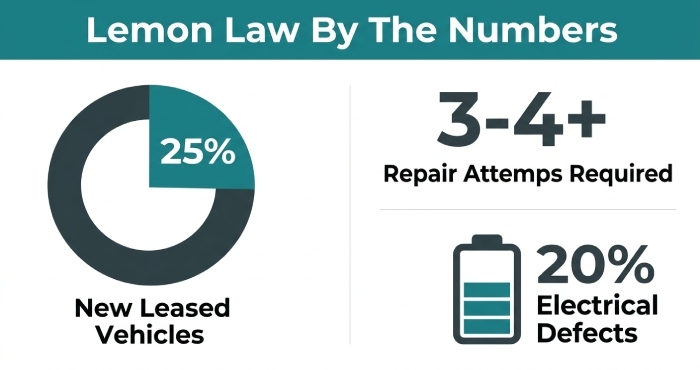
New vehicles leased in the U.S.
About 25% of new vehicle transactions
Lemon law claims involving recurring repairs
Most involve 3–4+ repair attempts
Vehicle defects linked to electrical systems
Over 20% of reported vehicle problems
Common disputed lease-end charges
Mileage, wear-and-tear, and disposition fees
Consumers who seek legal help achieve faster resolutions
Many claims settle before trial
Why Working With a California Lemon Law Lawyer Can Protect Lessees
A Lawyer Can Review the Buyback and Lease Charges Together
A California Lemon Law case involving leased vehicles is not just about proving the car is defective. It is also about making sure the buyback, termination of lease, and account reconciliation are handled correctly. A lemon law lawyer can review the manufacturer’s warranty, repair attempts, lease agreement, and final invoice to protect lessee rights.
Because the manufacturer often pays attorney fees in successful cases, many consumers can pursue legal representation without paying hourly fees upfront. Many firms also offer a free consultation. Drivers searching for the California lemon law lawyer should look for experience with leased vehicles, manufacturer negotiations, and post-buyback lease disputes.
Choosing Legal Representation in California
An experienced California lemon law attorney can help determine whether a leased vehicle qualifies under the state’s Lemon Law, evaluate refund or replacement options, and identify improper lease-end charges. When researching legal assistance, consumers should focus on an attorney’s experience with leased vehicle claims and California lemon law procedures.
For location-specific help, some drivers consult a California lemon law attorney or compare San Diego lemon law attorneys when a lemon law claim involves lease-end charges, a manufacturer’s warranty dispute, a substantial defect, a reasonable number of repair attempts, or a request for vehicle replacement.
Once a vehicle or product breaks down after the warranty expires, many consumers assume they have no legal options left. Manufacturers often rely on that assumption, hoping customers will simply walk away. However, the reality can be far more complicated. In some cases, you may still have valid legal rights and potential claims available — especially with guidance from an experienced California Lemon Law attorney.
This guide examines how issues that arise after the warranty period can still support legitimate claims, along with underutilized tactics that can enhance your case.
Understanding the Limits of Warranties
A warranty serves as a commitment from a manufacturer or seller to rectify or replace a faulty item within a designated timeframe. After this period lapses, the company generally considers its responsibility complete. However, it’s important to note that warranties are not the only form of legal recourse available to buyers.
Express vs. Implied Warranties
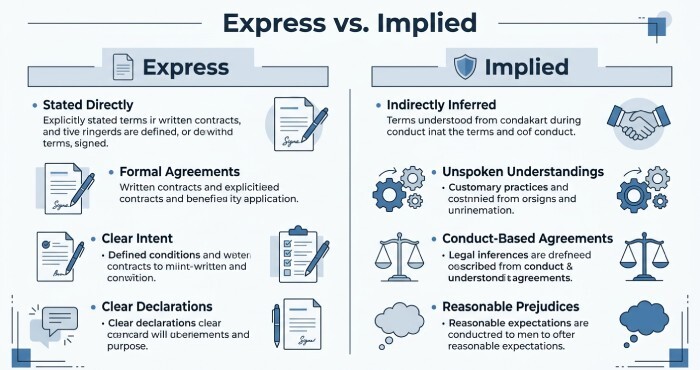
Express warranties are explicitly articulated (such as “3-year coverage”), whereas implied warranties function silently in the background.
Implied Warranty of Merchantability
This warranty guarantees that a product will perform satisfactorily for a reasonable duration. Even after the written warranty has lapsed, a product that malfunctions prematurely might still infringe upon this standard.
Implied Warranty of Fitness for a Particular Purpose
If a seller suggests a product for a specific application and it does not perform as expected in that scenario, you may have a basis for a claim, even if the warranty has expired.
Why “Out-of-Warranty” Doesn’t Always Mean “Out of Luck”
Manufacturers often rely on warranty expiration to protect themselves, but courts and consumer protection regulations tend to take a more comprehensive perspective.
The Idea of Expected Longevity
A crucial question in many situations is whether the product failed sooner than what a typical consumer would anticipate. For instance, if a premium appliance malfunctions shortly after the warranty period expires, it could still be deemed faulty if its expected lifespan is considerably longer.
Concealed or Hidden Defects
Some issues may not be immediately visible and are referred to as “latent defects.” These problems might only surface after the product has been used for a while. If you can demonstrate that the defect was present from the start but only became noticeable later, it can strengthen your case.
Case Evaluation Strategies That May Surprise You
Constructing a strong argument goes beyond merely highlighting a faulty product; it necessitates collecting evidence, grasping legal principles, and weaving together a coherent story.
1. Keep Detailed Records — Even Post-Warranty
Many individuals cease documentation once their warranty period concludes, which is a misstep.
Thorough documentation can illustrate a recurring issue and indicate that the problem wasn’t due to user error.
2. Investigate Common Defects and Recalls
Your problem may not be one-of-a-kind.
Importance:
If other customers have reported similar complaints, it points to a potential design flaw.
Recalls or technical service bulletins can bolster your argument.
Exploring online forums and complaint platforms may uncover trends.
Even if your specific item hasn’t been recalled, widespread issues can lend weight to your case.
3. Utilize Consumer Protection Regulations
In addition to warranties, multiple laws safeguard consumers from faulty products.
Examples of Legal Options:
Statutes for consumer protection
Claims of fraud or misrepresentation
Breach of implied warranty
These regulations often prioritize fairness over strict deadlines, making them beneficial for cases beyond warranty coverage.
4. Assess Manufacturer Behavior
A company’s reaction to grievances can significantly affect your argument.
Warning Signs:
Repeated unsuccessful repair efforts
Ignoring known issues
Providing misleading information about the product’s features
A consistent pattern of dismissive or deceitful actions can enhance claims of bad faith or unethical business practices.
5. Weigh the Costs Against Potential Benefits
Not every defect warrants legal action. A strategic analysis involves balancing potential recovery against expenses.
Considerations:
What is the product’s worth?
How much have you already invested in repairs?
Is replacement a more sensible option?
In some cases, even a partial settlement or recovery can make pursuing a claim worthwhile.
Even in Pine Valley, a vehicle that’s out of warranty but still defective may qualify for legal remedies—if you apply smart case evaluation strategies that uncover hidden opportunities for compensation.
Timing Still Matters—Even After Warranty Expiry
Though warranties come with specific time limits, legal claims can adhere to varying schedules.
Statutes of Limitations: These regulations determine the longest duration allowed for initiating a claim. Notably, the countdown can begin upon discovering a defect, rather than at the time of purchase.
Why This Matters:
You might still be eligible to file a claim even after several years.
Waiting too long could undermine your case.
Grasping these timelines is vital for protecting your rights.
Out-of-Warranty Defects: Data-Driven Insights
Statistic
Insight
Relevance
60% face product failure soon after warranty expiry
Failures often occur just beyond coverage
Shows need to evaluate claims beyond warranty
70% don’t pursue claims after warranty ends
Consumers assume no legal rights
Highlights lack of awareness of legal options
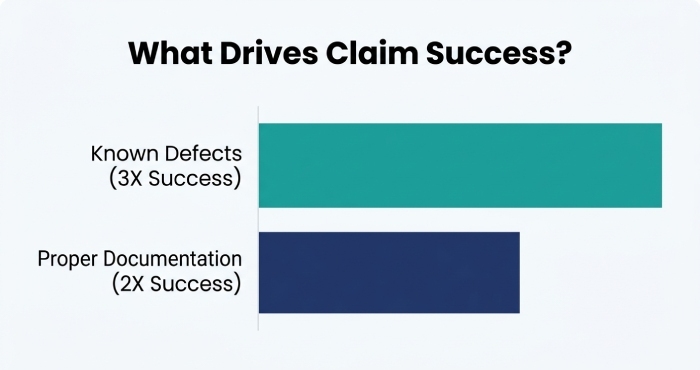
3x higher success with known defects
Recurring issues strengthen cases
Encourages checking recalls & complaints
50%+ disputes resolved via settlement
Court isn’t always required
Supports negotiation as a strategy
2x higher success with proper documentation
Records improve claim outcomes
Emphasizes importance of keeping repair history
Final Thoughts
A product failing after its warranty expires can feel frustrating—and unfair. But it doesn’t have to be the end of the road. By understanding your rights and applying smart case evaluation strategies, you can uncover options that many consumers overlook—especially with guidance from a skilled California Lemon Law Lawyer
The key lies in shifting your perspective: instead of focusing solely on the warranty, look at the broader picture. Defects, particularly those that appear prematurely or persist despite repairs, may still carry legal weight. An experiencedLemon Lawyer in San Diego can help assess whether your situation qualifies under consumer protection laws, even beyond the warranty period. With preparation, persistence, and the right legal strategy, you may find that your “out-of-warranty” case is far from over.
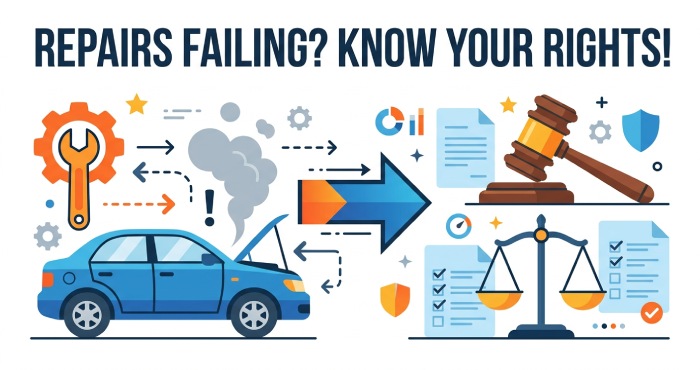
When purchasing a vehicle or any consumer item, buyers have a reasonable expectation that the product will function as advertised. Warranties are designed to uphold this expectation, providing assurance that the manufacturer or retailer will address any issues that arise. However, what should you do if a “repair” fails to resolve the problem? If you find yourself repeatedly visiting the repair shop for the same concern, it may be time to consider your legal rights, particularly under California’s strong warranty protection laws. In such situations, consulting a warranty attorney or Lemon Law attorney in California can help you better understand your options and protect your consumer rights.
00:00
[/sonaar_audioplayer
Understanding Warranties and Your Rights
A warranty is a legal assurance that a product will function as promised for a designated duration. In California, warranties are generally classified into two main types:
Express Warranty: This is a verbal or written assurance from the manufacturer or seller. It usually outlines specific conditions related to repairs, exchanges, or refunds if the product malfunctions.
Implied Warranty: California law presumes that a product is suitable for its intended use, even if this isn’t overtly stated. This is referred to as the implied warranty of merchantability.
If multiple repair attempts fail to resolve the problem, both warranty types may apply.
When Repairs Don’t Solve the Problem
It can be both aggravating and expensive when your vehicle or product repeatedly breaks down, even after several repairs. Typical situations might involve:
A car that continues to stall regardless of numerous engine fixes
Electrical problems resurfacing after being supposedly repaired
Ongoing transmission issues after maintenance
Persistent flaws that compromise safety or functionality
If the issue significantly detracts from the product’s usability, worth, or safety, and the manufacturer fails to resolve it after a reasonable number of tries, you might have grounds for a legal case.
What Is Considered a “Reasonable” Number of Repairs?
California law does not specify an exact number, but a product may be eligible for legal recourse if:
There have been several repair attempts for the same problem (usually between 2 to 4 times).
The product has been non-functional for a substantial duration (typically 30 days or longer).
The defect is significant and poses safety risks.
For automobiles, this situation is covered by California’s Lemon Law, which offers robust protections for consumers.
Your Legal Options Under California Law
When repairs fail, you’re not stuck with a defective product. You have several potential legal remedies:
Sure! Here’s a rephrased version of your text, maintaining the original meaning:
1. Replacement Policy
If your item is beyond repair after several attempts, you may be eligible for a replacement. In such instances, the manufacturer is likely to offer a new product that closely matches the original in value, features, and quality, ensuring you get what you initially paid for.
A buyback or refund is generally an option, especially for vehicles that are defective and meet specific legal standards. This usually includes reimbursement for the purchase price, taxes, registration fees, and any payments made, although a minor deduction may apply based on usage prior to the defect.
3. Monetary Compensation
You may be presented with a monetary compensation option instead of returning the item for a defect. This enables you to retain the product while receiving financial compensation for the inconvenience and the decrease in its value.
4. Ongoing Repair Requirement
In certain cases, the manufacturer might be obligated to continue making repairs until the issue is completely rectified. These repairs typically have to be done at no expense to you, ensuring that the product eventually achieves an acceptable level of performance.
The Role of a Warranty Lawyer in California
Dealing with warranty claims can be quite challenging. Manufacturers typically deploy legal experts to reduce their financial responsibilities, and they might contend that:
The defect isn’t significant
The problem resulted from improper use
Their repair efforts were adequate
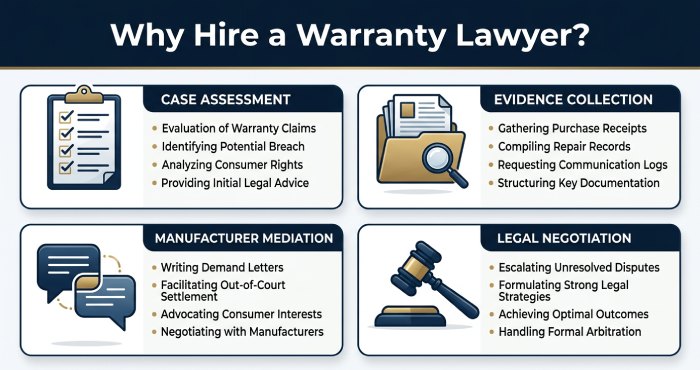
A warranty attorney can provide valuable support by:
Assessing your situation to see if you qualify
Collecting repair documentation and relevant evidence
Acting as an intermediary with the manufacturers
Negotiating settlements or pursuing legal action when necessary
Importantly, many warranty attorneys in California operate on a contingency fee basis, meaning you only pay if you win your case.
Latest 2026 Data: Rising Warranty Disputes in California
Key Statistic (2026 Update)
Data Insight
Rise in Lemon Law Claims
California filings grew from ~15,000 (2022) to 22,000+ in 2023–2024, showing a sharp upward trend
Recent Case Surge (2025)
Over 21,000 claims filed in just two counties (LA & Orange) in 2025 alone
Growth Rate
Lemon law filings increased by ~12% in early 2025 vs 2024
Success Rate of Claims
Many warranty/lemon law cases have ~98–99% success rates when properly documented
% of Vehicles Affected
Less than 1% of vehicles sold in California become lemons, but disputes are rising
The Importance of Documentation
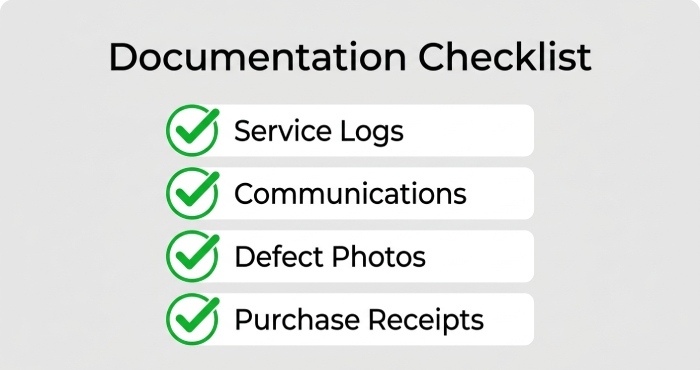
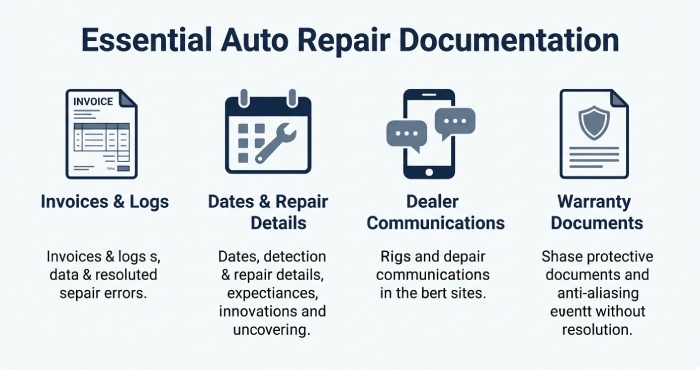
If you’re dealing with repeated repair failures, documentation is your strongest asset. Be sure to keep:
Preserve all invoices and service logs as evidence of the maintenance done on your car.
Document the dates and specific details of each repair attempt to illustrate the frequency of the problem.
Keep a record of all interactions with the dealer or manufacturer, including emails, texts, and notes.
Make sure to hold onto your warranty documents to verify the coverage and conditions relevant to your case.
This evidence helps establish a pattern of failure and strengthens your claim.
When to Contact a Warranty Lawyer
You might want to reach out to a warranty attorney if:
Your item has had several failed repairs
The problem reappears after being addressed
The manufacturer denies any fault
You’ve faced considerable difficulty or financial impact
Acting quickly to obtain legal guidance can improve your likelihood of a positive resolution.
How California Law Protects Consumers
California is recognized for possessing some of the most robust consumer protection legislation in the country. These regulations aim to ensure the following:
Manufacturers fulfill their warranty obligations.
Consumers aren’t left with faulty items.
Adequate compensation is granted if repairs do not succeed.
Additionally, if your claim is successful, the manufacturer might be obligated to pay your legal expenses as well.
Final Thoughts
If a repair fails to fix the issue, it may signal more than just inconvenience—it could indicate a violation of your legal rights. When a problem persists despite multiple repair attempts, California warranty law may entitle you to remedies such as a refund, replacement, or financial compensation. In such situations, consulting the Best Lemon Law attorney San Diego can help you understand your options and take the right steps toward securing a fair and effective resolution.