Most consumers assume a Lemon Law case ends with a simple buyback and a check based on the car’s value minus a mileage offset. However, many cases reveal that settlements can be far more creative—and significantly more valuable—than a standard repurchase. When defects persist, repair attempts pile up, and the manufacturer fails to respond adequately, working with an experienced Lemon Law Lawyer in San Diego can help secure outcomes that go well beyond the expected.
00:00
Defining “Wild”: What Separates Routine Buybacks from Extraordinary Outcomes
The baseline: what a standard buyback entails
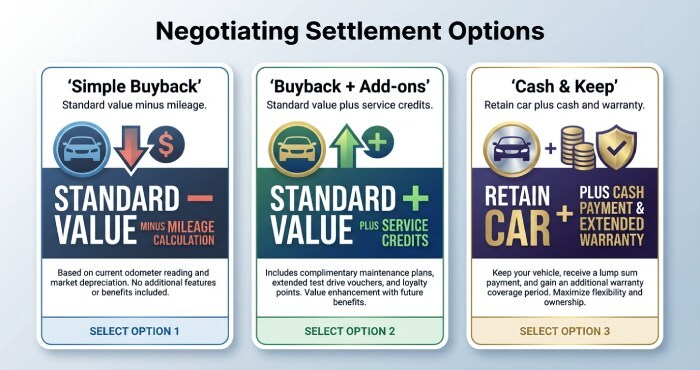
A routine lemon law settlement often centers on the buyback option: the vehicle manufacturer repurchases the defective vehicle and pays manufacturer compensation that approximates the market value of the car, minus depreciation and any statutory mileage offset.
The settlement amount typically includes tax, title, and registration, plus attorney fees where lemon law regulations allow fee-shifting. The compensation amount may also reflect the inconvenience to consumers and documented out-of-pocket costs.
Eligibility criteria usually hinge on a qualifying vehicle defect under state-specific requirements, a sufficient number of repair attempts, and a proper timeframe for reporting defects under the warranty.
The markers of a “wild” outcome
Extraordinary results go beyond the check. A “wild” lemon law settlement might include a negotiated payout plus creative benefits such as premium loaners, extended warranties, technology upgrades, or even policy changes at the dealership level.
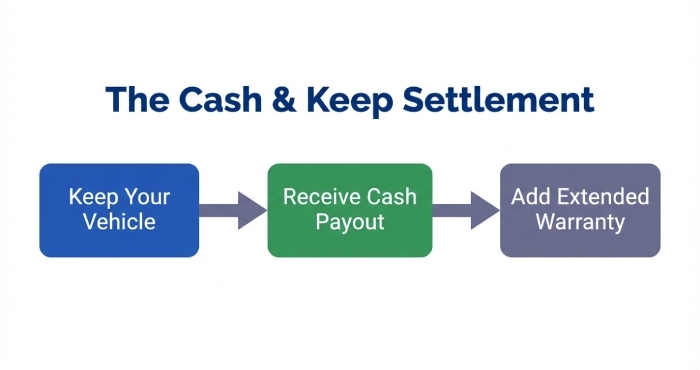
In some cases, consumers secure a cash and keep settlement that compensates for chronic issues while letting them keep the personal vehicle or family vehicle they otherwise like. The settlement amount may exceed a conventional formula because of the severity of the defect, repair history, and vehicle’s use and history.
Wild outcomes often follow meticulous documentation, a strategically framed lemon law claim, and a persistent lemon law attorney who leverages claim eligibility, dealer response patterns, and gaps in the manufacturer response.
Upgrades, Perks, and One-Off Fixes: The Most Creative Remedies on Record
Innovations in upgrades, benefits, and unique resolutions have led to some of the most inventive lemon law solutions documented, particularly highlighted by several notable instances in Glendale where consumers obtained customized remedies that went beyond the usual buyback options.
Perks that go beyond payment
Transportation credits: Some settlements have included months of Uber or Lyft ride credits to offset the inconvenience to consumers during ongoing diagnostics, particularly valuable when a defective vehicle intermittently fails.
Premium loaners and concierge service: Certain consumers received guaranteed luxury loaners and on-demand pickup/drop-off, treating the negotiated payout as part cash, part premium service.
Extended coverage: An enhanced warranty or prepaid maintenance plan can be layered onto a cash and keep settlement, especially when minor defects remain after repairs.
Engineering the exception: one-off technical fixes
In rare instances, a vehicle manufacturer has agreed to a bespoke fix not yet released to the public such as a custom software calibration for safety defects or a redesigned component to address major defects in an otherwise lemon car. These remedies may follow multiple unsuccessful repair attempts and a clear paper trail of the severity of the defect.
Protecting future value
Some settlements have included resale value guarantees if the chronic issues recur, or a right to future buyback at a pre-set settlement amount if the vehicle defect reappears within a defined timeframe.
When perks fit the facts
Wild remedies typically align with the vehicle’s use and history. For example, a rideshare driver who uses Uber or Lyft might justify transportation credits, while a family vehicle plagued by intermittent stalling might warrant a longer loaner window and priority diagnostics.
How to Aim Higher: Strategies to Negotiate Beyond a Basic Buyback
Prepare your leverage before you file
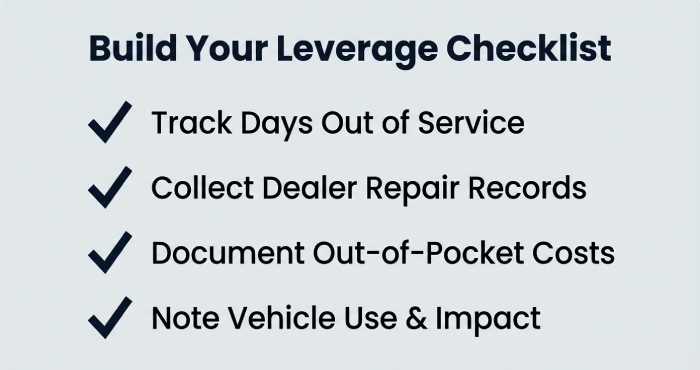
Nail the eligibility criteria: Track the timeframe for reporting defects, number of repair attempts, and days out of service. Collect records from each dealership visit and any dealer response in writing.
Capture context: Note vehicle’s use and history, including whether it’s a family vehicle, rideshare, or business asset, and the defective car’s age at each visit. Highlight safety defects and major defects distinctly from minor defects.
Use valuation and risk to expand the pie
Quantify the package: Start with the market value of the car, then layer in depreciation disputes, mileage offset critiques, and the inconvenience to consumers. Show why standard formulas undercompensate unique harms, including diminished resale value from a notorious vehicle defect.
Propose options: Present a menu—buyback option with addons, or a cash and keep settlement with an enhanced warranty, service credits, and a stipulated future buyback trigger. Tie each term to documented risk, cost to the vehicle manufacturer, and business impact on the dealership.
Anchor to business incentives: Emphasize how a swift lemon law settlement avoids disruptive litigation, adverse precedent, and public complaints—making higher manufacturer compensation rational. Back up with your repair history and any patterns in manufacturer response across service centers.
Choose representation that can execute
A seasoned lemon law attorney coordinates expert inspections, frames the legal theory, and presses pressure points during the settlement process. If you’re comparing counsel, many offer a free case evaluation and explain fee-shifting for attorney fees where the Lemon Law applies.
Consumers frequently seek the expertise of top lemon law attorneys for advice and representation. If you favor local legal support, these approved professionals can navigate state-specific laws and regulations, providing important insights into California’s distinctive legal intricacies.
Push for creative remedies in writing
Ask for perks tailored to your situation: transportation credits if your personal vehicle is unreliable, guaranteed premium loaners, concierge service, or a resale value floor. Connect each ask to concrete harms documented in your lemon law claim.
Weigh the pros and cons of each path
Settlement in cash: Grants quick access to funds and flexibility, though it carries ongoing risks.
Repurchase clause: Ensures a straightforward and predictable exit but may lead to disagreements regarding deductions and timing.
Agreed-upon payout: Most effective when it transparently addresses future concerns and specifies responsibilities.
Quick checklist to aim beyond the basics
Confirm claim eligibility and eligibility criteria under your state’s Lemon Law.
Document every visit, part, and dealer response; preserve the entire repair history.
Quantify losses: inconvenience to consumer, out-of-pocket costs, and impact on resale value.
Frame multiple proposals: buyback option with enhancements or a cash and keep settlement with an elevated settlement amount and extended warranty.
Leverage legal help early via a free case evaluation to calibrate your settlement amount and strategy.
DIY Lemon Law strategies help vehicle owners build strong documentation, track repair attempts, and encourage manufacturers to address serious defects quickly. If multiple warranty repairs fail to fix a problem that significantly affects the vehicle’s safety, value, or use, consulting experienced lemon law lawyers can help you understand state timelines and pursue remedies such as a refund, replacement, or settlement.
00:00
Rules and Records: The Foundation
Hack #1: Map Your State’s Lemon Law Rules, Deadlines, and Remedies
Begin by outlining the Lemon Law criteria specific to your state, which encompasses notice regulations, the count of repair attempts or duration of being out of service, and the potential remedies like refunds, vehicle replacements, or exchanges. Seasoned Lemon Law attorneys stress the importance of adhering to strict deadlines and maintaining detailed records to strengthen your claim and enhance the chances of a favorable outcome.
What to Map
Statute of limitations and any tolling rules
Final repair opportunity notice content and delivery method
Calculation of use deduction and buyback formula based on MSRP
Eligibility for a substantially similar replacement vehicle versus full refund
Whether a release of claims is required at delivery of relief (and what it must say)
Pro Tip: Dispute Programs and Arbitration
Some states require a certified dispute settlement mechanism or state certified dispute settlement step before filing suit. Know whether arbitration is recommended or mandatory and whether it is binding arbitration.
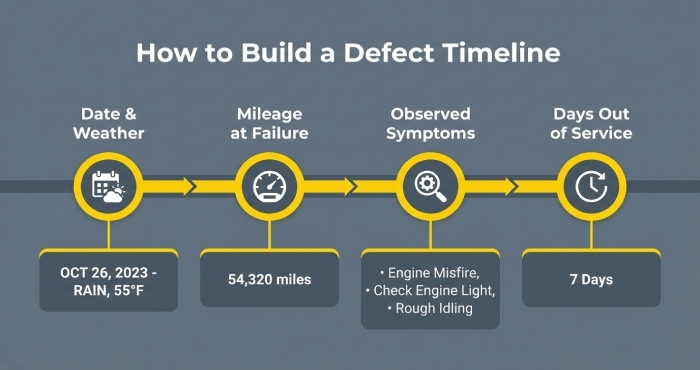
Hack #2: Build a Precise Defect Timeline and Mileage/Days-Out-of-Service Log
Maintain a day-by-day chronology of symptoms, mileage at each failure, and days out of service. Pair each entry with a specific vehicle repair order to show repeated, unresolved defects under warranty or extended warranty coverage.
Logging Essentials
Date, mileage, weather/conditions, warning lights, and drivability notes
Dealer name, repair order number, and actual downtime
Service advisor statements or “could not duplicate” notes
Cross-references to videos, OBD-II data, and TSBs/recalls
Evidence and Service Documentation
Hack #3: Demand Complete Repair Orders and Paper Trails at Every Service Visit
Insist on detailed, printed repair orders—don’t accept a vague paper form or a bare-bones email. Incomplete documents are a trap for the unwary and weaken a DIY Lemon Law record.
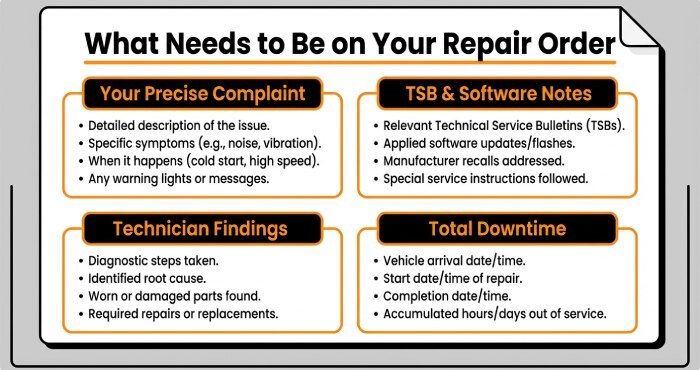
What Belongs on Every Repair Order
Your precise complaint in your own words
Technician findings, tests performed, and all parts replaced
Software updates, TSB numbers, road-test notes, and mileage in/out
Total days out of service and next-steps plan
Service Write-Up Checklist
Confirm the VIN and odometer match your log
Ask for line-item labor ops and part numbers
Request copies of prior visits if the system “can’t find” them
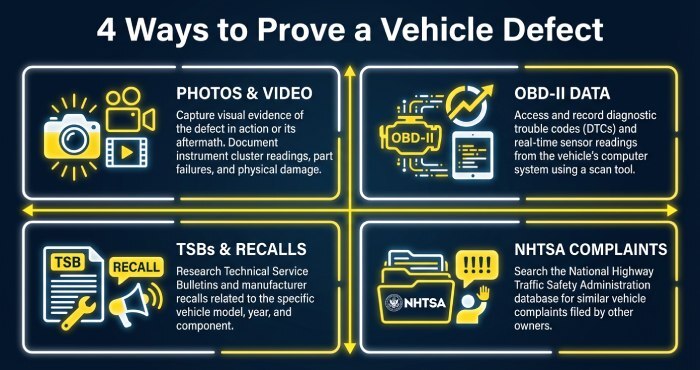
Hack #4: Document the Defect Like a Pro—Photos, Video, OBD-II Data, and Witness Statements
Use your phone and an OBD-II scanner to create a clear record. Short videos of the defect, freeze-frame codes, dash lights, and ambient conditions strengthen a lemon law claim.
Corroboration Matters
Collect witness statements from passengers or service personnel
Back up files in a cloud folder labeled for fast review
Hack #6: Use TSBs, Recalls, and NHTSA Complaints to Prove a Known, Repeated Issue
Technical Service Bulletins (TSBs), safety recalls, and NHTSA complaint data show the manufacturer knew (or should have known) of systemic problems. This evidence supports both liability and remedy.
Source and Cite
Print or save TSB PDFs with publication dates and applicability
Reference NHTSA campaign numbers and complaint IDs
Note whether updates were attempted during vehicle repair
Hack #5: Trigger the Final Repair Opportunity with a Clear, Certified Demand Letter
Most Lemon Law statutes require giving the manufacturer a final chance to repair. Send a certified, return-receipt letter that sets a deadline and identifies the defect history.
What to Include
VIN, in-service date, mileage, concise defect summary, and repair attempts
Demand for relief: full refund or a substantially similar replacement vehicle
Request for a safe loaner or replacement vehicle free of charge during further work
Warning: do not sign any premature release of claims in exchange for diagnostics
Cite fee-shifting provisions and your readiness for dispute settlement or arbitration
lemon law buyback value” width=”700″ height=”370″ />
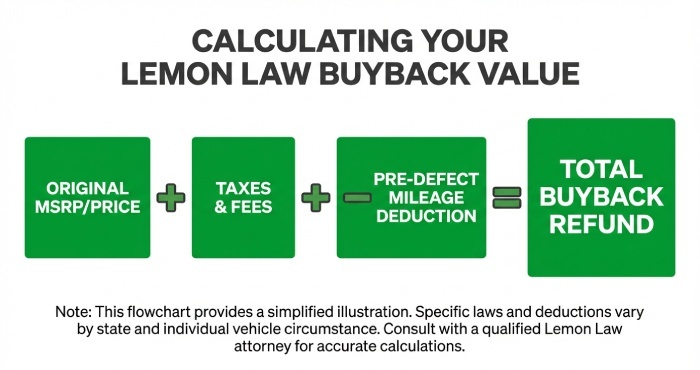
Hack #7: Calculate Your Buyback Value Using the Statutory Formula and Use-Offset
Most statutes compute a full refund using MSRP or purchase price plus taxes, fees, and incidental damages, minus a use deduction based on miles driven before the first substantial defect. Include financing charges and add-ons where permitted.
Formula Basics
Start with MSRP or the actual purchase price, as your state requires
Add sales tax, title, registration, and permissible incidental costs
Subtract the use deduction tied to pre-defect miles
Compare with a trade out or a replacement vehicle to see which refund option is best
Evaluate the manufacturer’s offer against statute and your documents
Organize and Negotiate With Leverage
Hack #8: Create a Claims Binder and Digital Evidence Vault for Fast, Persuasive Review
Organize your lemon law claim like a trial exhibit set in Inglewood. An indexed binder and a synced cloud folder can speed up reviews by manufacturer customer service teams, outside counsel, or a state-certified dispute settlement panel in California.
Demand letter, delivery receipts, and any settlement or case results references
Hack #9: Negotiate with Leverage—Fee-Shifting, Arbitration Programs, and Escalation Paths
Leverage comes from clean documentation, clear remedies, and statutory fee-shifting. Politely escalate from dealer to manufacturer customer service, then to corporate resolution teams. Consider a certified dispute settlement mechanism or arbitration if it improves timing while weighing the risk of an adverse decision in binding arbitration.
Leverage Points
Cite statute of limitations and your intent to preserve all lemon law rights
Compare outcomes: full refund versus replacement vehicle; confirm whether accessories and extended warranty refunds are included
Reject any overbroad release of claims that exceeds your state’s Lemon Law
If the manufacturer’s offer is low, present your calculation and a clean, paper form settlement draft you propose
To sum up, utilizing these DIY Lemon Law strategies can assist you in recording issues, managing repair documentation, and bolstering your consumer rights case. Nevertheless, seeking advice from a knowledgeable San Diego lemon law attorney can enhance your likelihood of obtaining a refund, replacement, or equitable settlement.
Managing mediation under California’s Lemon Law can seem like a frantic sprint for both dealers and consumers. Many drivers are taken aback by the stringent notice periods, repair attempts, and required response times, which can lead them to anticipate a faster outcome. Grasping these essential timelines is vital for safeguarding your rights and preventing expensive hold-ups in disputes related to lemon law in California.
00:00
Setting expectations: how long Lemon Law mediation actually takes in California — myths vs averages, court-connected vs private sessions, and the factors that speed or slow the process
Myths vs averages in California Lemon Law timelines
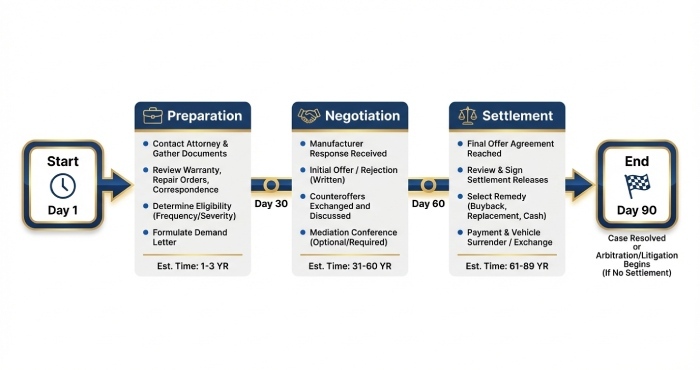
A persistent myth says Lemon law mediation wraps in a week. In reality, most California lemon law disputes reach the table in 30–90 days, with one-day consumer mediation sessions and another 15–45 days to finalize settlement performance. Court-connected programs often post faster calendars for early dispute resolution, while private sessions may allow more flexibility in mediator choice and preparation.
Under the California Lemon Law—including the Song-Beverly Consumer Warranty Act and the federal Magnuson-Moss Warranty Act—Top lemon law lawyers emphasize that vehicle owners and dealers must first gather complete service records and warranty evidence, as this preparation, more than the calendar, determines how quickly meaningful negotiations can begin.
Court-connected vs private lemon law mediation
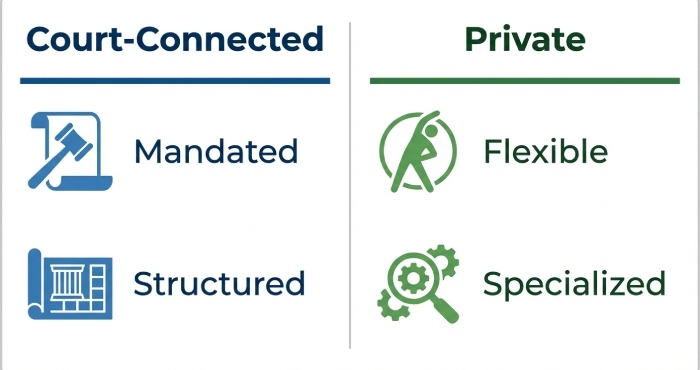
Court-related: Under the regulations of the California Code of Civil Procedure, courts may mandate mediation and utilize case managers to ensure compliance with deadlines and to oversee structured disclosures.
Private: Individuals have the option to select a dedicated mediator from organizations such as the American Arbitration Association, allowing for adaptable scheduling and specialized knowledge in lemon law.
Factors that accelerate or impede consumer mediation
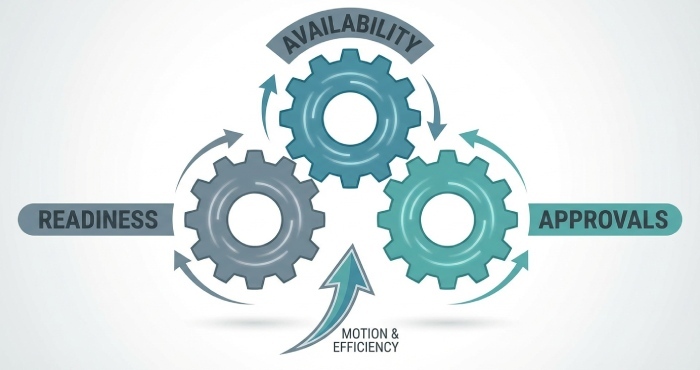
Three variables drive timing: availability, readiness, and approvals. First, mediator calendars and manufacturer opt-in windows influence how soon vehicle owners meet automobile dealers at the table. Second, data readiness—repair orders, notice letters, and payoff information—prevents day-of stalls. Third, corporate approval layers for dealer buy-back, replacement of motor vehicle, or restitution can add hours or weeks.
Mediation fees, particularly when cost-sharing is disputed, can also slow confirmations. Programs that use block mediation days for lemon law disputes may compress timelines. Conversely, seasonal bottlenecks (year-end holidays, model-year rollouts) stretch scheduling.
Manufacturer opt-in and mandatory mediation dynamics
Some manufacturers require internal preclearance before they opt in to consumer mediation, which can add 7–21 days.
In select venues, standing orders encourage mandatory mediation for consumer claims to promote case resolution; that court signal often shortens response windows.
Where manufacturer opt-in is swift, and parties accept a standard session length, lemon law mediation typically sets within 30–60 days.
When the clock starts: triggers and statutes that shape timelines — repair attempts, 18‑month/18,000‑mile presumptions, notice to the manufacturer, and the pre‑mediation prep window
Statutory triggers under Song-Beverly and Magnuson-Moss
Under the Song-Beverly Consumer Warranty Act, the 18‑month/18,000‑mile presumptions can shape leverage and readiness, but they are not hard prerequisites to begin lemon law mediation. The Magnuson-Moss Warranty Act also supports attorney’s fees and broader consumer protection, encouraging litigation alternatives like consumer mediation before a filing.
Timelines begin to make sense once warranty issues are documented: multiple repair attempts for the same defect, vehicle out-of-service days, or a safety-related nonconformity. These statutes underpin negotiations over restitution, repairs compensation, or a dealer buy-back.
Notice, repair attempts, and warranty issues documentation
Written notice to the manufacturer or its authorized automobile dealers often precedes a manufacturer opt-in decision.
Keep all repair orders and communications; under both the Song-Beverly Consumer Warranty Act and the Magnuson-Moss Warranty Act, these records drive valuation of consumer claims.
Some counsel cite California Code of Civil Procedure §871.26 in court-connected settings to anchor scheduling of mandatory mediation and define disclosure deadlines.
Pre‑mediation preparation window and legal frameworks
The pre‑mediation prep window—typically 2–4 weeks—collects service histories, payoff statements, and any misrepresentation or automotive fraud evidence. Related frameworks like the Uniform Commercial Code and the Consumers Legal Remedies Act can inform remedies and civil penalties theories.
Recent legislative attention, including Assembly Bill 1755 (AB 1755) and Senate Bill 26 (SB 26), underscores California’s ongoing focus on efficient dispute resolution services and consumer protection, even as specific timelines remain driven by the mediation process itself.
Getting to the table: response windows, mediator selection, scheduling logistics, and seasonal bottlenecks — what a typical 30–90‑day path looks like
Response windows and mediator selection
Week 1–2: Demand sent; notice triggers the manufacturer opt-in review. Automobile dealers coordinate with the manufacturer and their insurer. Some brands route cases through BBB National Programs, including BBB AUTO LINE, or AAA mediation program desks.
Week 2–4: The parties exchange proposed mediators. Many California practitioners turn to a mediation specialist such as PGP Mediation or neutrals like Phyllis Pollack for deep knowledge of lemon law disputes and mediation procedures.
Scheduling logistics, block mediation, and seasonal bottlenecks
Week 4–8: Calendaring with case managers at the mediation provider, considering counsel conflicts and block mediation days that manufacturers reserve for consumer mediation. Expect longer queues near holidays and fiscal quarter-ends.
Week 8–12: If documents lag or lender payoff, valuation, or replacement of motor vehicle options are still under review—dates push. Some counties, from Los Angeles to Merced County, experience courthouse-driven delays in court-connected tracks, while private sessions can move faster with a neutral forum willing to convene by video.
California Lemon Law Mediation: Key Statistics and Case Trends
Statistic
Data Point (California)
Insight
Annual Lemon Law Claims Filed
Approximately 15,000–20,000 consumer complaints annually
California Lemon Law cases remain high due to strong consumer protections.
Mediation Success Rate
Around 60–70% of cases resolve during mediation
Most disputes settle before going to full civil trial.
Average Time to Mediation Resolution
2–4 months
Mediation significantly reduces resolution time compared to litigation.
Settlement vs Trial Rate
Over 80% settle before trial
Manufacturers prefer mediation to avoid legal costs and penalties.
Attorney Fee Recovery Rate
Nearly 100% recoverable if consumer wins
Under California law, manufacturers must pay prevailing consumer’s legal fees.
For tailored guidance on sequencing, fees, and local practices, consult a seasoned mediation specialist or a focused lemon law attorney. If you need regional insight, a Cadillac Lemon Law attorney San Diego can explain county‑specific mediation procedures and scheduling realities. You can also explore a dedicated lemon law attorney resource for strategy on manufacturer opt-in, confidential mediation terms, and preserving leverage through settlement or trial.
Leasing a vehicle is supposed to give you peace of mind but when your car keeps breaking down, that convenience can quickly turn into frustration. Many drivers don’t realize that leased vehicles are often protected under state Lemon Laws, just like purchased cars. Experienced Lemon Law lawyers can help you understand whether your leased vehicle qualifies, explain your legal options, and guide you through the process of seeking the compensation or replacement you deserve.
How Lemon Laws Apply to a Leased Vehicle
Lemon laws offer similar protections for leased vehicles as they do for those purchased outright. If a vehicle under warranty develops a problem that remains unresolved despite reasonable repair attempts, you might be eligible for a refund or a replacement. While the specifics of lemon laws can differ by state, the federal Magnuson-Moss Warranty Act also addresses breaches of warranty.
Since a lease involves the lessee, lessor, and manufacturer, it’s important to notify the leasing company and follow all required dispute procedures an experienced Lemon Law Lawyer San Diego can help ensure every step is handled correctly. If the defect substantially affects the vehicle’s use, value, or safety during the original warranty period, a skilled attorney can pursue available lemon law remedies on your behalf.
Coverage, Severity, and Timing (Signs 1–3)
Indicator of Eligibility 1: Vehicle Type and Lease Usage
Most state lemon laws apply to leased passenger vehicles, such as cars, SUVs, and light trucks that are primarily used for personal activities, with some states also covering small-business leases. Verify if your state includes leases for new vehicles, demonstrator models, or Certified Pre-Owned cars, and look for any exceptions related to commercial use or mileage limits. For instance, California’s Lemon Law includes many leased vehicles under the new-vehicle warranty, offering buyback options via the Department of Consumer Affairs.
Indicator of Eligibility 2: Significant Defect Impacting Function, Value, or Safety
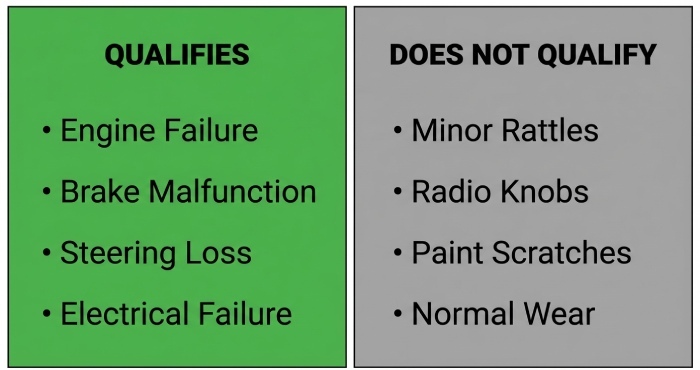
The issue must significantly hinder the vehicle’s functionality, market value, or safety, rather than just being superficial. Typical qualifying defects encompass engine stalls, failures in brakes or steering, transmission issues, airbag or Advanced Driver Assistance System (ADAS) glitches, electrical malfunctions, or major system breakdowns. If the defect renders the vehicle unreliable or hazardous, lemon law protections may be applicable.
Indicator of Eligibility 3: Issue Emerged Within the Legal Timeframe
Generally, laws stipulate that defects must arise within the original manufacturer’s warranty period or within a defined time/mileage threshold (often between 12 to 24 months or 12,000 to 24,000 miles). The initial attempt to repair must fall within this timeframe, even if subsequent repairs occur after. It’s essential to retain all repair documentation to support claims made under state lemon laws and the Magnuson-Moss Warranty Act.
Examples of qualifying safety issues
Brake failure or steering loss
Airbag failure, SRS faults, or seatbelt pretensioner errors
Transmission issues that cause sudden loss of power or harsh shift shocks
Electrical failures that create a fire risk or disable exterior lighting
Repair Attempts and Downtime (Signs 4–6)
Indicator of Eligibility Sign 4: Repeated Repair Efforts for the Same Problem:
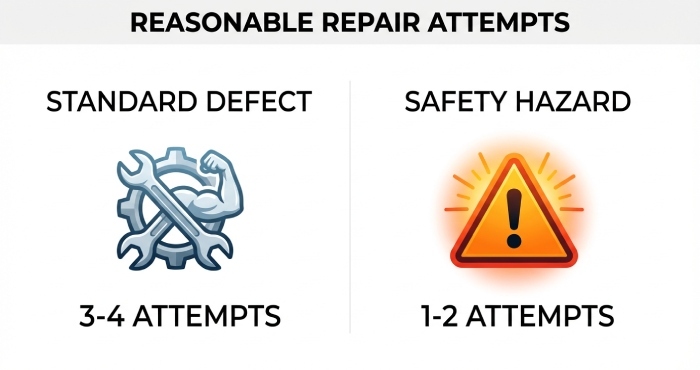
When a defect has been addressed 3 to 4 times without a permanent solution, it may fall under lemon law regulations. Documentation should clearly indicate the same recurring issue and the dealer’s multiple attempts to resolve it.
Indicator of Eligibility Sign 5: Critical Safety Flaw:
In cases of significant safety concerns such as brake malfunctions, steering failures, fuel leaks, fire hazards, or airbag issues, just one or two unsuccessful repair attempts might be sufficient to meet the qualifications because of the associated risks.
Indicator of Eligibility Sign 6: Prolonged Service Interruption:
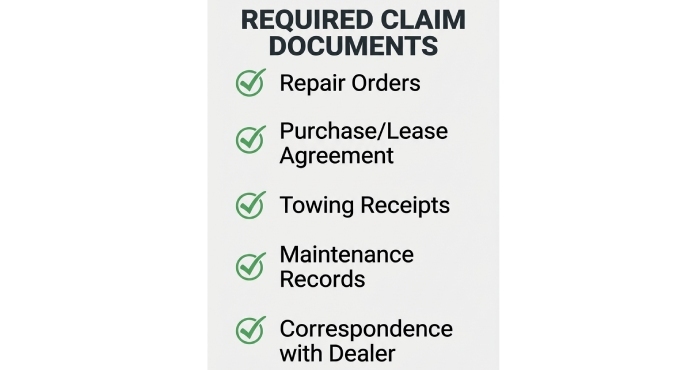
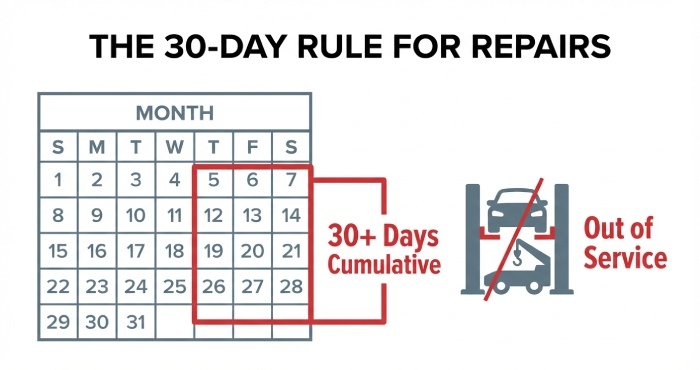
If your vehicle has been inoperative for over 30 cumulative days due to warranty repairs, it could be eligible. It’s important to maintain thorough records of repair dates, towing invoices, rental agreements, and any notices regarding delays.
Authorized Repairs, Maintenance, and Notice (Signs 7–9)
Indicator of Eligibility Sign #7: Authorized Service Center & Final Opportunity for Repairs:
Typically, repairs need to be performed at a service center authorized by the manufacturer. You may also be required to provide written notification, offering a final opportunity for them to address the issue. Utilize a trackable mailing service and verify if your state mandates a dispute resolution program, such as BBB AUTO LINE, before initiating a claim.
Adhere to the official maintenance schedule provided by the manufacturer, and steer clear of racing activities or aftermarket additions. Keep thorough records of all services performed and retain receipts to demonstrate that any defects stem from manufacturing issues rather than improper use.
Indicator of Eligibility Sign #9: Record-Keeping, Arbitration, and Important Deadlines:
It’s essential to keep copies of all repair orders, invoices, tow receipts, and any correspondence related to the issue. In some jurisdictions, arbitration through BBB National Programs is required, as they administer BBB AUTO LINE for manufacturers like Ford, Volkswagen, and Audi, before you can seek a refund or replacement through legal channels.
State and Federal Backstops for Leased Cars
In Fairbanks Ranch, drivers leasing vehicles can rely on strong state lemon laws and federal protections like the Magnuson–Moss Warranty Act to ensure manufacturers honor warranty obligations and provide remedies when serious defects persist.
Lemon laws established by various states outline precise criteria for obtaining refunds or exchanges. For instance, in California, the Lemon Law mandates that manufacturers adhere to definitive buyback protocols. Consumers are encouraged to consult their state’s Department of Consumer Affairs or Attorney General’s website for information regarding leased vehicles.
At the federal level, the Magnuson-Moss Warranty Act provides lemon law protections if a manufacturer does not remedy significant defects covered by warranty, allowing consumers to claim legal fees.
BBB National Programs operates BBB AUTO LINE and additional self-regulatory entities, which provide impartial dispute resolution services utilized by numerous car manufacturers.
Practical tip: If your leased car exhibits the key indicators of a lemon such as being the right type of vehicle, having a significant defect, undergoing timely repair attempts, being given enough chances to resolve the issue, spending a considerable amount of time out of service, having authorized repair visits, receiving appropriate maintenance, and adhering to notice or arbitration guidelines you could be eligible for compensation under your state’s lemon law, and possibly under the Magnuson-Moss Warranty Act as well.
A lemon law attorney will emphasize the importance of thorough documentation and repair records in establishing a solid claim and achieving the most favorable result.
These major class actions have not only secured compensation for drivers but also strengthened transparency and accountability across the auto industry. If you’re facing similar issues, consulting a San Diego lemon lawyer can help you understand how these legal precedents may support your claim.
From Lemon Laws to Class Actions: How Individual Defects Became Systemic Fights
How a single repair order can spark a movement
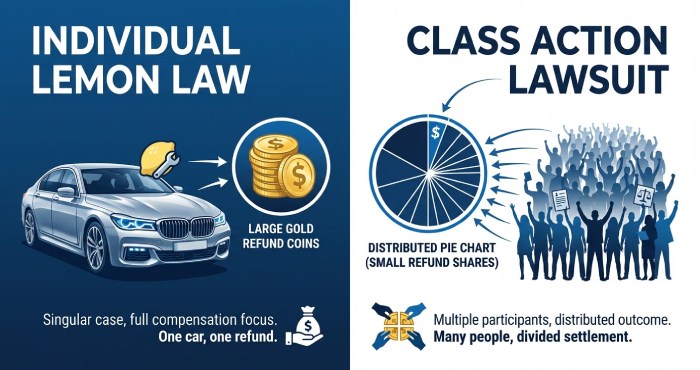
The contemporary lemon law framework was established to tackle disputes over vehicles when multiple repair attempts prove ineffective. According to the Song-Beverly Consumer Warranty Act, consumers in California are entitled to a refund, replacement, or other remedies if a new or certified used vehicle exhibits ongoing defects. Initially, what were thought to be standalone lemon law claims have unveiled more widespread, recurring issues affecting specific vehicle models.
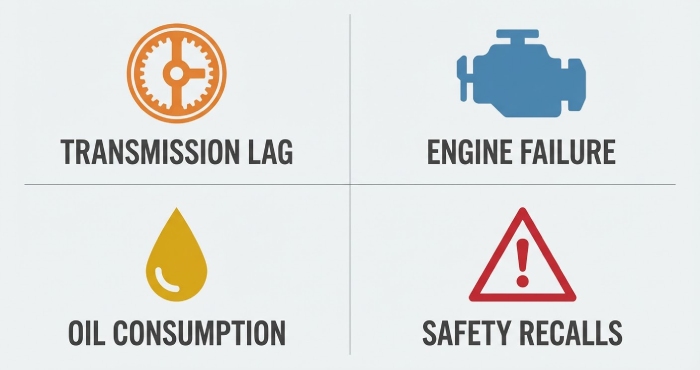
When a defect such as failure of the transmission or stalling of the engine — manifests in numerous vehicles, individual cases can progress into class action lawsuits. These collective actions address shared defect concerns on a larger scale, while California lemon laws continue to safeguard individual rights. In combination, lemon law solutions and class actions offer personal restitution as well as the possibility of accountability across the industry.
From personal buyback claims under California’s Lemon Law to extensive class action lawsuits targeting major automobile manufacturers, instances that begin in places like Palomar Mountain illustrate how localized vehicle issues can escalate into widespread systemic legal confrontations.
Landmark Cases That Moved the Needle (Ford DPS6, Nissan CVT, Hyundai/Kia Engine, Subaru Oil Consumption)
Ford Motor Company DPS6 Dual-Clutch Transmission Issues
Class action lawsuits regarding the DPS6 transmission in Ford Focus and Fiesta vehicles cited issues such as shaking, lag in acceleration, and early wear. Owners’ repair records contributed to the evidence of widespread problems. Settlements offered various forms of compensation, including extended warranties, cash payouts, and buyback options for eligible vehicles based on local regulations and individuals’ claims history.
Nissan Motor Co. CVT Transmission Issues
Lawsuits concerning Nissan models equipped with CVTs, like the Sentra, Altima, and Rogue, alleged problems such as overheating, sluggish acceleration, and premature transmission failure. Settlements frequently included extended warranty coverage, reimbursements for repairs, and occasionally options for vehicle repurchase, with some owners seeking more robust solutions under state lemon laws.
Hyundai Motor Company / Kia Corporation Engine Issues and Subaru Corporation Oil Consumption Problems
Hyundai and Kia dealt with class actions and recalls linked to engine bearing failures and fire hazards, while Subaru faced claims regarding high oil consumption in certain engine models. Settlements generally featured extended powertrain warranties, reimbursements for repairs, and monitoring initiatives, leading some vehicle owners to weigh the benefits of class action relief against potential buyback options under individual lemon laws.
What These Settlements Deliver: Buybacks, Extended Warranties, Reimbursement, and Monitoring
The Variety of Solutions and When Buyback Programs Are Appropriate
Automotive class action lawsuits frequently provide long-term warranties for future security, along with reimbursements for previous repair expenses, occasionally including buyback options. In California, the Song-Beverly Consumer Warranty Act may offer more favorable outcomes, such as refunds or replacements, if repair documentation strongly supports a lemon law claim.
Management, Reimbursements, and Compliance Oversight
Successful settlements depend on clear communication, straightforward claim procedures, and rigorous monitoring to ensure that manufacturers meet their obligations and make timely payments. Vehicle owners should also take into account mileage adjustments and potential tax implications when comparing payouts from class actions with recoveries under California’s lemon law.
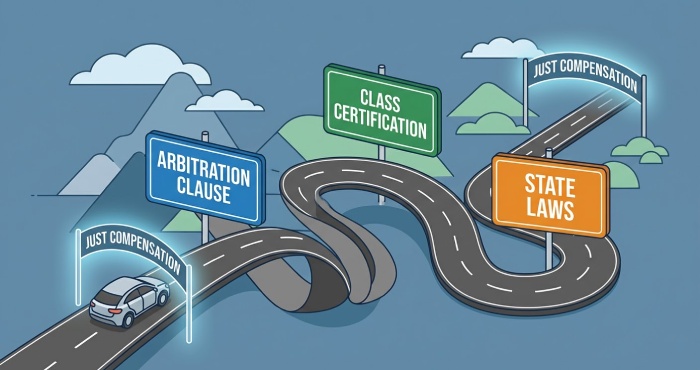
Procedural Potholes: Certification Hurdles, Arbitration Clauses, and State‑by‑State Variations
Key roadblocks that shape outcomes
Class certification requires common questions to predominate no small feat when vehicle usage, maintenance, and dealer practices vary. Manufacturers often argue that individual issues swamp common ones, while plaintiffs emphasize uniform design flaws. Arbitration clauses can divert cases from court; some class action lawsuits navigate this with opt‑out windows or arguments that public‑injunction claims are non‑arbitrable.
Meanwhile, state‑by‑state variations matter: California lemon laws are among the strongest, but other states may limit remedies, affecting leverage in settlement negotiations. Knowing when to proceed in a class action versus pursuing individualized lemon law claims is a strategic call best informed by a lemon law attorney who understands both the class landscape and the statutory lemon law process.
Owner Playbook: Documenting Defects, Joining or Opting Out, and Maximizing Relief
Practical steps to protect your claim and choose the right forum
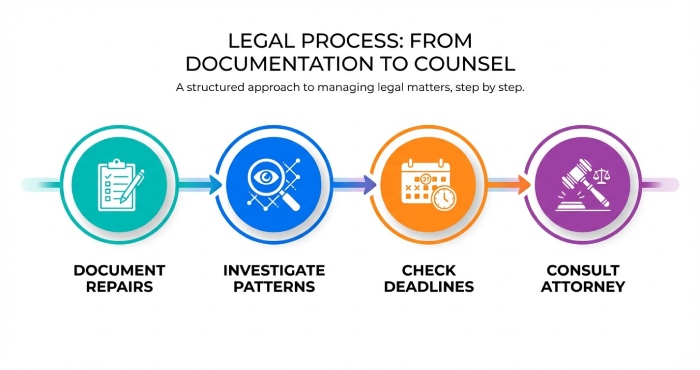
Document Everything: Maintain comprehensive records of repair invoices, service updates, and technician observations to reinforce your lemon law or class action case.
Investigate Discussions: Assess whether pursuing a class action or an individual claim under the Song-Beverly Consumer Warranty Act might yield a quicker resolution or greater compensation.
Be Aware of Deadlines: Keep a close eye on settlement notifications and filing schedules to ensure you don’t miss your opportunity for reimbursement.
Align Problems with Patterns:Vehicle owners affected by Ford DPS6 issues, Nissan CVTs, General Motors truck defects, Tesla software or battery problems, or Stellantis transmission issues should explore both class action suits and state lemon law remedies.
Consider Your Location and Resources: Collaborate with specialized firms like California Lemon Law Guys or knowledgeable local attorneys who are well-versed in California lemon laws and national class action proceedings.
Choose representation wisely: Why hire a lemon law attorney? Because aligning the lemon law process with class action timing, settlement terms, and buyback program criteria takes experience. For guidance from top lemon law lawyers, consider interviewing multiple firms to compare strategy.
Latest statistics and major class action
Point
Latest Statistic (Brief)
Volkswagen Diesel Settlement (2016)
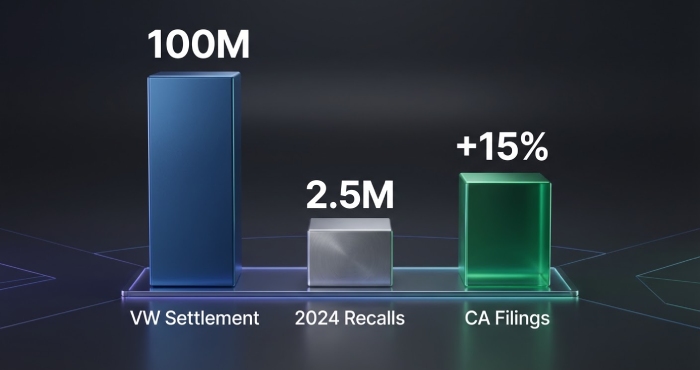
$15.3B paid; ~475K owners compensated%
Auto Defect Class Actions
$800M+ recovered from major automakers
California Lemon Law Filings (2024)
50%+ increase year-over-year
U.S. Vehicle Recalls (2024)
~29 million vehicles recalled
Consumer Awareness
60–70% buyers unaware of lemon rights
Manufacturers like General Motors (including GMC and Chevrolet), Ford, Nissan, Chrysler, Dodge, Jeep, Ram, and Tesla face evolving scrutiny as class action lawsuits and lemon law claims continue to surface. The intersection of settlements, monitoring provisions, and the statutory remedies available through California lemon laws gives owners multiple avenues to secure relief. With the Lemon law attorney calibrating strategy taking into account certification hurdles, arbitration clauses, and the comparative value of a buyback program drivers can turn individual frustrations into enforceable consumer rights.




 lemon law buyback value” width=”700″ height=”370″ />